
10 Truths About Building a Sustainable Art Career
Why the artist you envy may not be the living the artistic life you actually want.

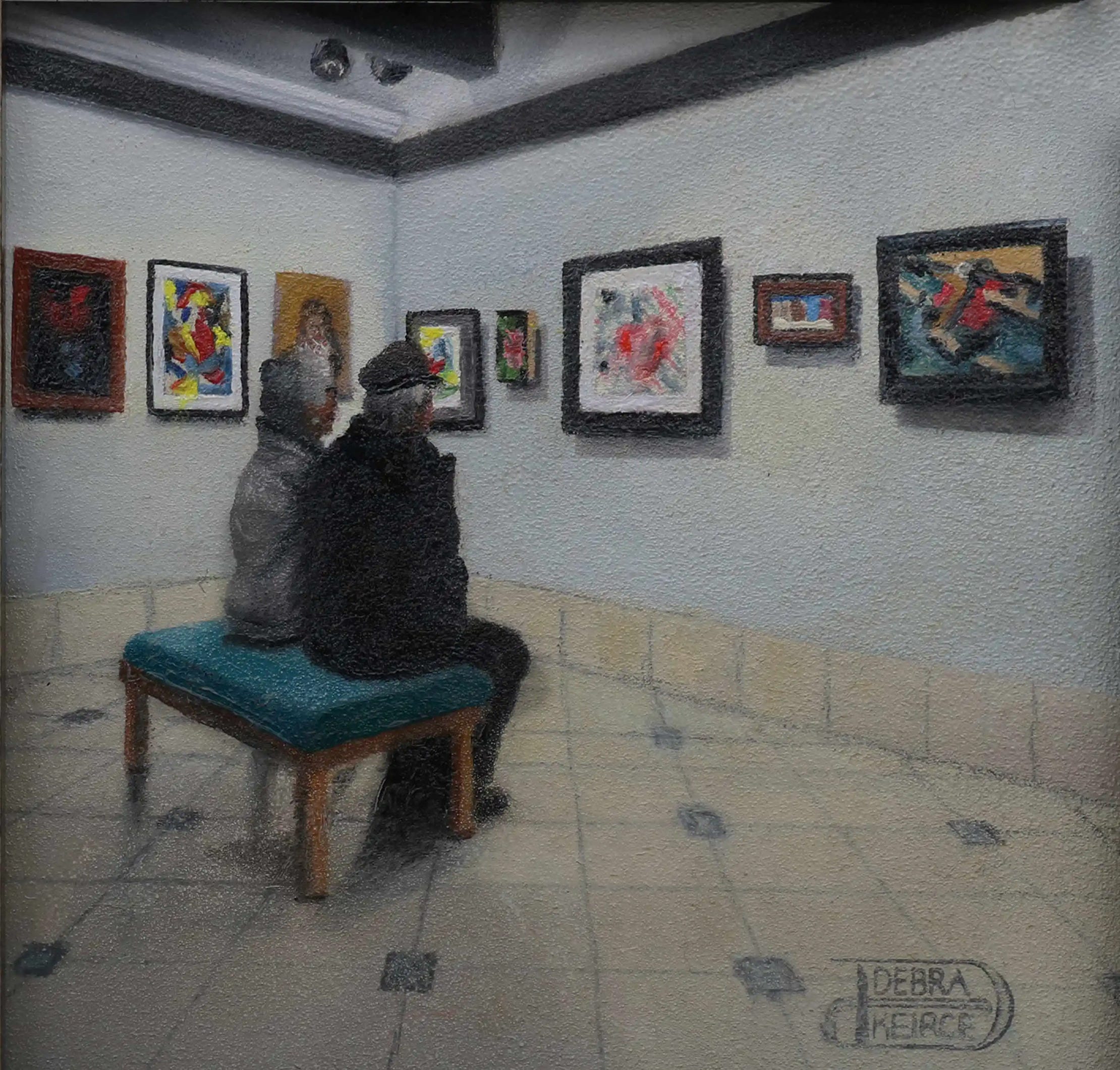
“And now that you don’t have to be perfect, you can be good.”
—John Steinbeck
Please click the Like button—the little heart icon at the top and bottom—if you want nine tiny sovereign artists to ride into your studio on miniature ponies, banish envy, bless your website, and remind you that fame is optional but showing up is not.
Also, back here in ordinary reality, your like helps this essay reach more artists and art lovers, which helps us keep promoting the arts and supporting artists. Thank you.
One of the best things about our recent conversation on The FASO Show with Debra Keirce was that she said out loud what many artists quietly suspect:
There is no single right way to build an art career. There is only the art career that fits the actual artist who has to live it.
That matters, because many artists are quietly tormenting themselves by chasing someone else’s definition of success. One artist wants gallery representation. Another wants direct sales. Another wants to teach. Another wants museum recognition. Another simply wants art to remain a joyful part of retirement.
Those are not the same goals.
So why would they require the same marketing plan?
This episode was so good, our team asked ChatGPT to pull out the most important points. We felt that pulling out these nine lessons in a more organized, and shorter, format would be useful to our subscribers. Our team worked with ChatGPT to get these points organized in the clearest format that we could. And then we went through and edited them for presentation and clarity.
Some of you may bristle at our use of AI for this, so we’d like to explain: Our beef with AI is primarily when it is used in a way that reduces opportunities for artists. Our goal, in the places we do utilize AI, is to use it in a way that supports human artists.
For example, at FASO, we do not train AI on your artwork for the purposes of using it to generate alternative images. We do use AI to protect your artwork from scrapers (including other AI bots). And we will use AI in ways that send more art lovers and collectors to our customers.
As always, The FASO Way is an open forum, so we’d love to know what your opinion of such AI use is in the comments. And, please, as we always request, all comments must be dignified and respectful of us and of your fellow artist colleagues who may have differing points of view. We are in this together, so discussion, and even debate, is important. But hateful or threatening comments will be blocked.
Here are ten truths from Debra’s conversation that every artist should consider:
1. Don’t take advice from people whose lives you don’t want
Before Debra takes advice from someone, she looks at the life their advice appears to have produced. Are they happy? Have they sold the kind of work they are teaching others to sell? Has their own marketing worked? Do they seem grounded?
The art world is full of advice. Some of it is useful. Some of it is wrong for you. Some of it is sold by people who are better at selling advice than selling art.
A sovereign artist does not reject help. But a sovereign artist discerns which voices deserve authority.
2. Your art career is a triangle
Debra described the artist’s life as a triangle of time, money, and quality.
And, unfortunately, you usually cannot maximize all three at once.
If you optimize for money, you may sacrifice time, freedom, or joy. If you optimize for quality, you may sacrifice short-term income. If you optimize for time, you may knowingly leave money on the table. This is simply facing reality.
With this in mind, the question is not simply, “What is the best way to market art?”
The better question is, “What is the best way for me to market my art in this season of my life?”
⚜️ Advertising note—we have a special offer that ends this month for half off your first year of a FASO website. If you’ve been waiting, now is the time. The details are below, after the essay.
3. You cannot do everything at once
Debra did not begin her full-time art career immediately. She built an engineering career, raised children, stabilized her life, and came to art professionally later. You might say she optimized for money, first. Clint discusses this concept in his forthcoming book, The Sovereign Artist in the section on the importance of independence. You can’t be sovereign if you’re always desperate for work to sell.
Unfortunately, many artists feel guilty because they cannot do everything at once. They cannot raise children, pay bills, build skills, create a body of work, market consistently, attend every event, and post every day.
But sometimes the season you are in simply does not allow that. And that does not mean you are not an artist. It means you are living a human life.
Be graceful with yourself and remember that a small flame can be tended, even when it cannot yet become a bonfire.
“A man who chases two rabbits catches neither.” — Timeless Proverb
4. The best marketing plan is one you can sustain
Debra knows there are ways she could make more money. She could teach more online. She could structure commissions more aggressively. She could narrow her work into one highly marketable lane.
But, and this is important, she has learned what she enjoys and what she does not.
That is wisdom, not laziness.
If you hate social media, then a plan that depends entirely on social media will probably fail. If you love teaching, then hosting workshops and demonstrations may be natural. If you love people, then in-person events may be your strength. If you love writing, then make email your marketing lynchpin.
The best marketing strategy is not the sprint that looks impressive for three weeks, it is the marathon you are still running three years from now.
5. Commissions are not just transactions
Debra spoke beautifully about the commissions she still accepts. She does not do a huge number of them. But the ones she does take often connect to grief, memory, celebration, or love.
Artists who do commissions should not merely say, “I accept commissions.” That diminishes what art is—sending love through form.
A better message is: “I help people preserve something they love.”
A portrait, a home, a pet, a landscape, a wedding, a family memory, a loved one who has passed — these things are not merely subjects. They are personal myths that make the story of one’s life sing.
That should change how artists talk about commissions on their websites.
6. Your legacy may already be showing itself
Debra said she did not think much about legacy earlier in her career. But looking back, she can see patterns: the Coast Guard collection, the Langham Hotel portraits, narrative realism, nostalgia, skill, memory, and works that make people smile.
That is often how legacy works.
It is not always invented in advance. Sometimes it is discovered by looking honestly at what has already emerged.
What themes keep returning in your work? What do people come to you for? What opportunities keep opening? What would you be proud to be remembered for?
You don’t make up your brand; your reputation, you discover it.

7. Define your non-negotiables
Debra returns again and again to skill development, networking, volunteerism, peer engagement, and showing up.
Every artist needs some version of this.
You don’t need a giant productivity system or a 47-step marketing plan. You just need a few non-negotiable practices that keep the career moving.
Keep making new work. Keep improving your skill. Keep your website current. Keep sharing. Keep building relationships. Keep following up. Keep putting yourself in rooms where art is being discussed, shown, taught, or collected.
An art career usually moves a nanometer at a time.
A conversation here. A newsletter there. A show where you gain three new collectors. A collector note that touches your heart. A website update with work you are proud of. A new painting that takes your vision to the next level.
Drip. Drip. Drip. A constant drip of water cuts through stone.
8. You may become excellent and still not become famous
Debra named a hard truth: you may become very skilled and still never become a superstar. The world does not distribute attention in proportion to skill. It does not distribute fame in proportion to effort. But that is only devastating if fame is the goal.
What is popular is not the same as what is good. In fact, they are often inversely proportional. True artists pursue the good. Sometimes they get popular.
For most artists, a better goal is resonance: to make work true enough, skillful enough, and visible enough that the right people; the people who care, can find it.
9. Envy is wasted motion
Debra was blunt about envy, victimhood, and artist circles that spiral into complaint. And she is right.
Envy does not make better work. It does not build better relationships. It does not help collectors find you. It does not improve your website, strengthen your skills, or deepen your vision.
It only burns energy that should have been used for growth.
The right artist community asks, “What can I do next?”
The wrong one keeps asking, “Why did they get what I deserved?”
10. Your real audience is gathered over time
A magazine feature, an award, or a viral post may create a spike in followers. But many of those people will fall away. They were interested in the event, not necessarily the artist. Your real audience is the group that remains.
They are the people who open the emails, visit the website, and come back to the booth. They ask about the new series. They remember a painting they saw three years ago. And, eventually, they become collectors, students, patrons, or friends. Clint likes to share an anecdote that one of his best collectors took over three years of follow ups to make the first purchase.
Your follower count is not your collectors. Your collectors are those who enter into a relationship with you.
And this is why artists need a home base: a website, an email list, a collector list, a body of work, a story, and a way for people to return. (We just happen to have what we consider the best home base for you at FASO. There are details at the end of this article if you’re looking for a great deal on a website).
The deeper lesson
Marketing, for the artist, is not the act of becoming more marketable. It is the act of making the true work findable by the people it was meant to reach.
Yes, the practical work matters, so keep your website, build the list, tell the story, attend the events, follow up, share the work, improve your craft, and please, please, make it easy for people to inquire, buy, commission, or learn more.
But underneath all of that is the real work: Know who you are. Know what you are building. Know what you are willing to sacrifice. And know what you are not willing to sacrifice.
No one else can build your art career for you.
And once you know what kind of art life you are trying to live, marketing becomes much clearer.
And clarity is where true sovereignty begins. So, as the inscription over the Oracle of Delphi implored: Know Thyself.
PS — We know setting up or switching websites is a pain. But, in this day and age, you need your own home base.
And you need it to be with a company who cares about human artists. A company with actual artists who support you and with whom you can talk. A company that actually promotes their artists, as you can see that we do in this very newsletter. Frankly, that company is us, FASO. We stand up For Artful Souls Online.
A great website, contrary to what big tech says, is more important than ever.
So to make it easier for you, we’ve put together a special spring deal where you’ll get your first year on our platform for only $150. That’s a 52% savings off the normal price of $312/year. Think of it as us paying you $162 to move your website to a place that actually promotes human creativity. Just sign up for a trial account by clicking the button below and be sure to activate your account within the first 15 days of your trial.
Please take this opportunity to move away from platforms that use your hard work as “content” to serve hostile algorithms while they callously steal your artwork to train their AI systems. We are here, ready and waiting to help you regain your sovereignty. Please join us and thousands of other sovereign artists in this movement.
We do not use AI images with our writing. We prefer to feature and provide more exposure for human artists. If you know of a great piece of art we should consider, please leave a comment with a link to it. All featured images are properly attributed with backlinks to the artist’s website. You can help support human artists and push back against AI by liking or restacking this piece by clicking the “Like” icon ❤️, by clicking the “Restack” icon 🔁 (or by leaving a comment).
As an artist the best way I have learned to combat envy is to think “good for them” when I see someone get some opportunity that I want.
At first it was a slightly sarcastic “good for them” but over time it has become sincere, and now I’m just happy for other artists.
Debra, I'm an old pro who's been around a long time but I still loved your podcast AND the text. We can never get enough reminders to keep working the left-brain stuff. Thank you so much for clear, concise reminders to keep us on track. My husband was even impressed!