
Enthousiasmos: The Ancient Secret to Knowing Reality
How do we know the truth? In our scientific age, many people believe that we arrive at truth by reason alone. Not so the ancients...

We have another post today by Eugene Terekhin, the man and the mind behind the publication Philosophy of Language.
Eugene is a regular contributing writer to The BoldBrush Letter.
This article will be locked in two days for paying members only.
From our Sponsor:
For Serious Artists: Get The Attention Your Art Deserves

Have you ever wished you could work with a website host that seriously promoted your art?
That’s exactly our new FASO Diamond plan.
We’ll promote your art to thousands and thousands of art lovers
via email and social media over the course of 2026.
This is essentially the same promotion we do with our signature artists and worth over $7,000, but will cost only $3,000/year.
But, to celebrate our upcoming 25th anniversary, we only have TWO (2) introductory slots left at 40% off for only $1,800 (includes both the website and the promotion).
We can’t accept everyone so, if your art is ready for prime-time, and you’re serious about your art career, then click here to apply for one of the remaining 15 spots.
Feature Article:
Enthousiasmos: The Ancient Secret to Knowing Reality
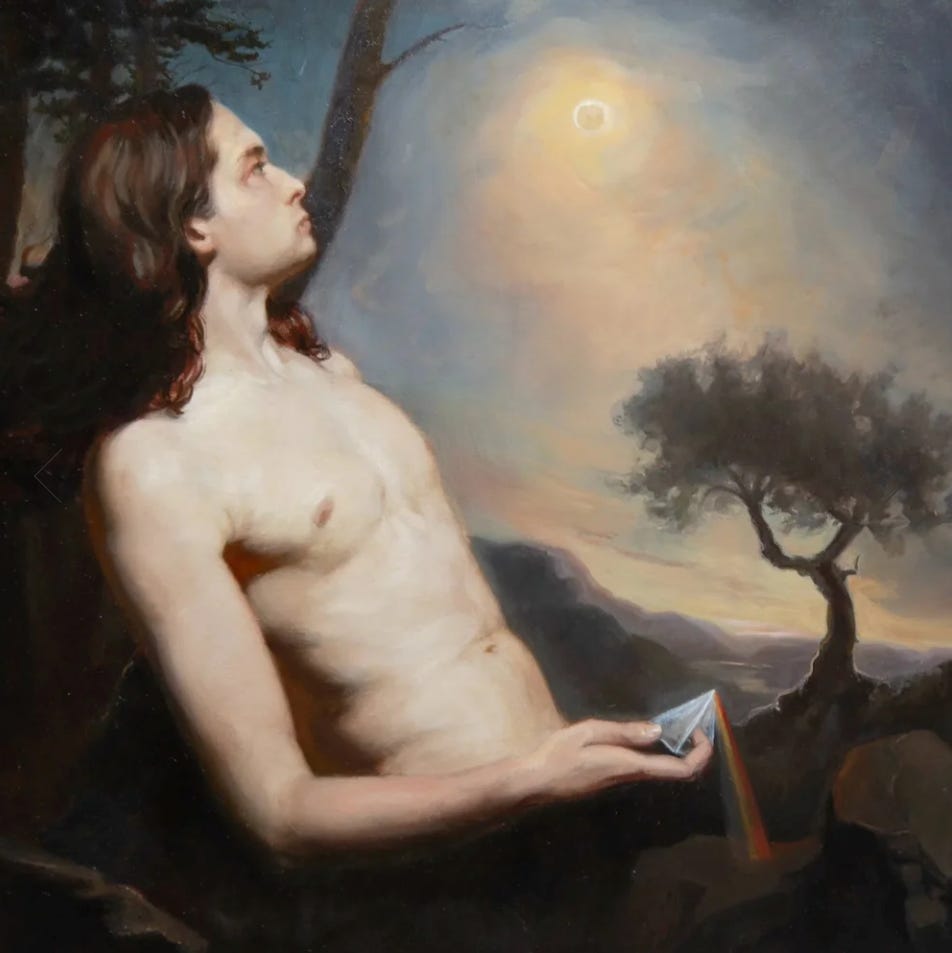
How do we know the truth?
In our scientific age, many people believe that we arrive at truth by reason alone. Not so the ancients. Even though in Plato’s time, reason was highly respected, it was never worshiped. It had its place, but it was not seen as the “truth radar.”
Plato believed that we arrive at truth only when reason is joined by enthousiasmos, or divine madness – the state in which the highest truth discloses itself in a sudden flash of recognition.
Enthousiasmos, from the Greek for “in God,” is a God-inspired state, often called divine madness, where a person is filled with prophetic insight, poetic imagination, or ecstatic vision and perceives the truth behind the visible phenomena.
The truth of the world can only be known in the state of “divine madness.”
Interestingly, when the Apostle Paul says in 1 Corinthians 1:25: “For the foolishness of God is wiser than men,” he seems to express something very similar, namely, that when God reveals something directly and you act upon it, it often appears as foolishness to “pure reason.” And yet this divine madness is wiser than all rational arguments.
When we are “in God” – when we experience enthousiasmos – our reason is enlightened. The unenlightened mind calls it madness, but it is divine madness, which is wiser than all human wisdom.
“When a man sees the beauty in this world, he is reminded of true beauty, and his wings begin to grow.” – Plato, Phaedrus
In enthousiasmos, we are reminded of the true beauty behind the phenomena of the world – we catch a glimpse of the world beyond – and our wings begin to grow.
Only in this state, enthousiasmos, do we see things as they truly are. To perceive truth, we must undergo divine ecstasy — literally, “being taken out of yourself.”
This is exactly what happens to a lover. Plato says,
“The word “lover” refers to a lover of beauty who has been possessed by this kind of madness. For, as I have already said, the soul of every human being is bound to have seen things as they really are, or else it would not have entered this kind of living creature.”
When we catch a glimpse of “otherworldly beauty,” we are engulfed by divine madness. We become lovers – we know things deeply and truly, as only a lover can know them. Our soul tells us that, in that moment of ecstasy, we are contemplating things “as they are” in Heaven.
In this moment, we become truly wise, as David says in Psalm 27:4:
“One thing I ask from the Lord, this only do I seek: that I may dwell in the house of the Lord all the days of my life, to gaze on the beauty of the Lord and to seek him in his temple.”
In a fit of divine ecstasy, David exclaims that there’s nothing he would rather do than contemplate God in His beauty. Why?
Because when a glimpse of divine beauty whisks us out of this world, we are drawn outside of ourselves. And in that egoless state, Truth catches us unawares and reveals itself to us as to a Lover.
As Søren Kierkegaard says,
“The truth is a snare: you cannot have it, without being caught. You cannot have the truth in such a way that you catch it, but only in such a way that it catches you.”
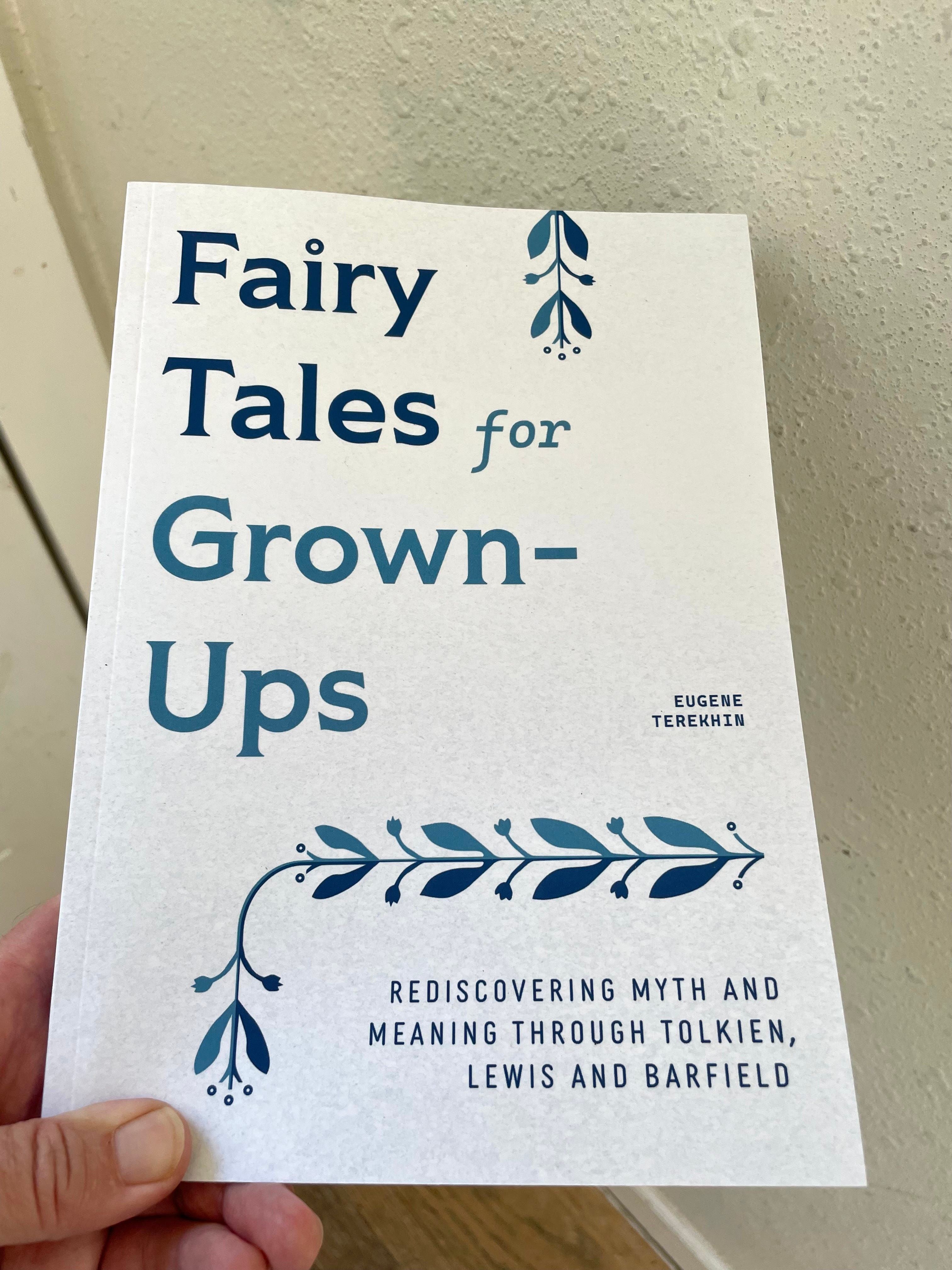
PS — Check out Eugene’s new book Fairy Tales for Grown-Ups: Rediscovering Myth and Meaning through Tolkien, Lewis, and Barfield.
Available on Amazon or his website.
PPS - Don’t forget to sign up for Eugene’s newsletter, Philosophy of Language here.
FASO Loves Mary Ann Krutsick’s paintings
Wouldn’t You Love to work with a website hosting company that actually promotes their artists?
As you can see, at FASO, we actually do, and,
we are the only website host we know of that does.
Click the button below to start working
with an art website host that actually cares about art.
PS - If you prefer Squarespace websites, you should check out our Artful Square offering. We can generally save artists money, unlock extra features, and we promote our Squarespace artists too!
No AI Zone: Everything written in this post (and all our posts) is written 100% by flesh and blood humans
We do not use AI images with our writing. We prefer to feature and provide more exposure for human artists. If you know of a great piece of art we should consider, please leave a comment with a link to it. All featured images are properly attributed with backlinks to the artist’s website. You can help support human artists and push back against AI by liking or restacking this piece by clicking the “Like” icon ❤️, by clicking the “Restack” icon 🔁 (or by leaving a comment).
So true. Todays world concentrates so much on "science", as in "follow the science", but so much is lost by only focusing in on the purely rational. As you noted with Paul in 1 Corinthians 1:25: “For the foolishness of God is wiser than men"... Amen to that!