
I Saw an Angel in the Marble and Set Him Free
The Art of Listening Until Something Begins to Sing

Important Notice
We are soon changing the name of this newsletter from The BoldBrush Letter to The FASO Way. Although we had reasons to use the name BoldBrush, over the years we have discovered that separating our offerings into two brands causes much confusion for most people. So, to solve that issue, we are retiring the BoldBrush name and moving all of our offerings under our main brand, FASO.
We have another post today by Eugene Terekhin, the man and the mind behind the publication Philosophy of Language.
Eugene is a regular contributing writer to The BoldBrush Letter.
This article will be locked in two days for paying members only.
FASO Loves Ryan S. Brown’s paintings
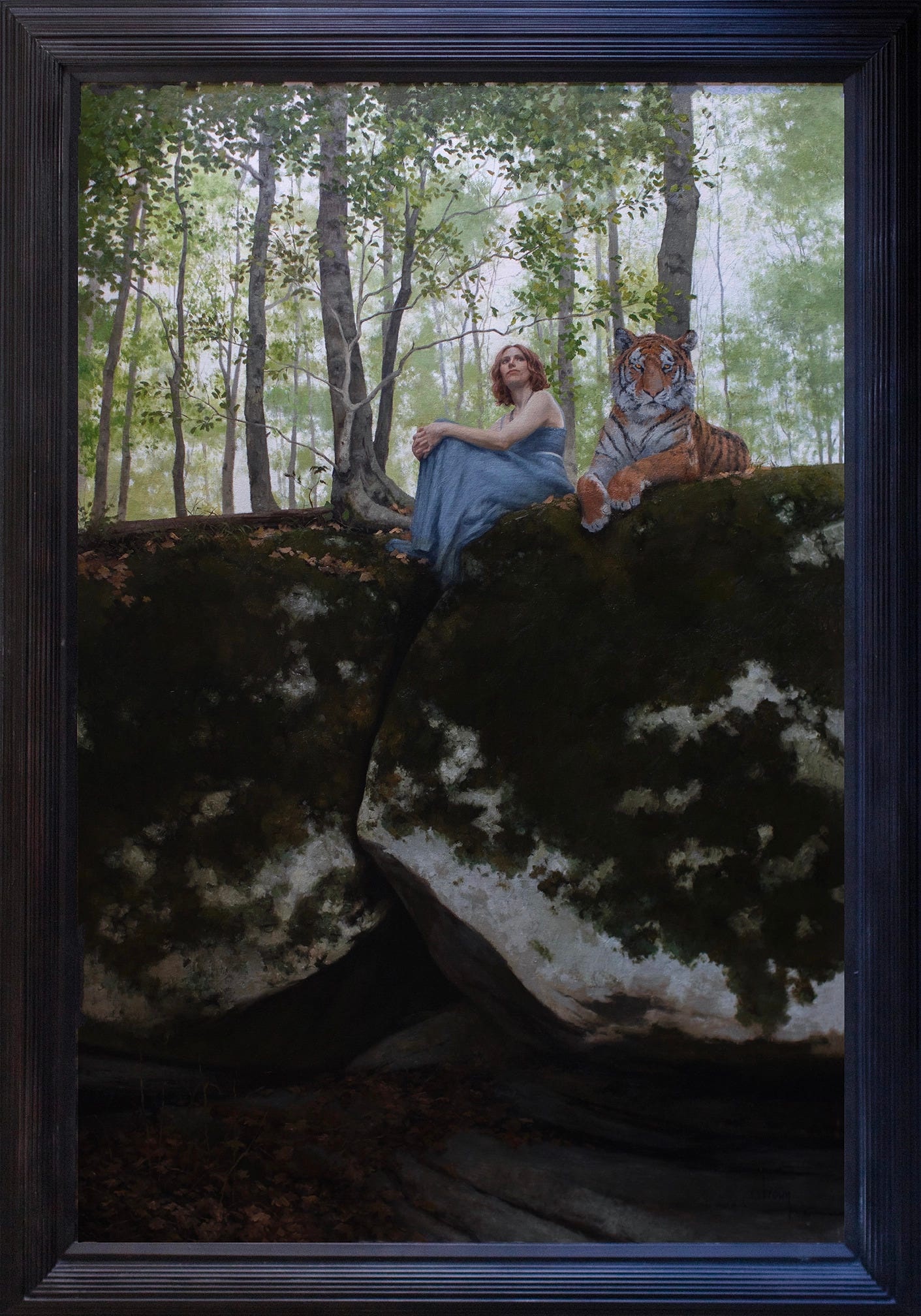
Wouldn’t You Love to work with a website hosting company that actually promotes their artists?
As you can see, at FASO, we actually do, and,
we are the only website host we know of that does.
Click the button below to start working
with an art website host that actually cares about art.
PS - If you prefer Squarespace websites, you should check out our Artful Square offering. We can generally save artists money, unlock extra features, and we promote our Squarespace artists too!
Feature Article:
I Saw an Angel in the Marble and Set Him Free
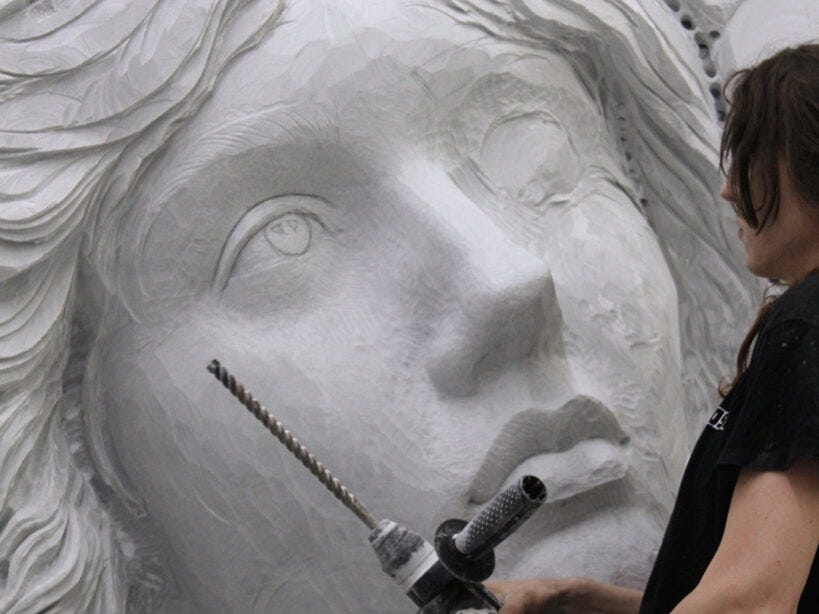
When I wander through the nearby grove looking for material for my woodworking projects, I do not pick up pieces until they start “speaking” to me.
It’s easy to choose a piece that matches a preconceived design in my mind. It’s much harder to listen to the material and allow it to be what it is.
And yet, starting with a rigid idea and bending the material to fit it rarely produces real art. The moment I force something to conform to my vision, it loses its authenticity.
Real magic happens when I pay attention to what the material tells me. If I listen to its story, it reveals its secrets.
William Paul Young, author of the widely known novel The Shack, once told a striking story about crafting violins. He described how violin makers search along river bends for hollow logs. They move from one to another, gently tapping and listening to the tone each produces.
What they seek is the log with the most distinctive resonance. Once properly dried, the artisan carves it with great care, using minimal force so that the natural grain and fibers remain undisturbed.
The principle is simple: the finest instrument emerges only when you “follow the material” rather than impose a preconceived idea upon it.
If you care about art, you cannot coerce something into becoming what you imagined it would be before actually encountering it. As Plato taught, every object participates in its own Idea. Our task is not to create this Idea, but to discover it.
The artisan’s calling is to perceive and recognize this inner form – the Idea – that already belongs to each thing.
I may approach something with my own concept of what it is. But if I wish to share in its Idea, I must release my preconceptions and learn to listen. If I listen long enough, the “object” begins to speak.
Matter discloses its secret only to the one who is willing to listen.
Much of the ugliness in the modern world comes from imposing ready-made schemes onto reality – pressing it into rigid molds instead of allowing it to unfold as it is.
Thomas Merton said:
“The beginning of love is the will to let those we love be perfectly themselves, the resolution not to twist them to fit our own image.”
William Paul Young ends his violin story with a striking insight: the finest violins are crafted from the most crooked logs. These are the most valued and carefully sought-after. A skilled luthier understands that the more storms a tree has endured – the more twisted and “unshapely” it has become – the deeper and more resonant the music it can yield.
When you allow a thing – or a person – to be fully what it is, when you truly listen to its unfolding story, something extraordinary happens: it begins to sing. The storms it has weathered become the very source of richness and depth in its self-expression.
The melody was always there – locked inside – waiting for someone to lean in with an attentive ear and let it come forth.
If we want to hear real music, we must let go of our rigid ideas about things, about people, even about God, and become all ears.
“He who has an ear, let him hear.”
Whether you are writing a book, painting a portrait, renovating a home, or raising a child, the aim is not to impose a shape or a scheme but to cultivate sufficient sensitivity to what is already present.
Michelangelo was once asked how he approached the sculpting process. He answered:
“I saw the angel in the marble, and carved until I set him free.”
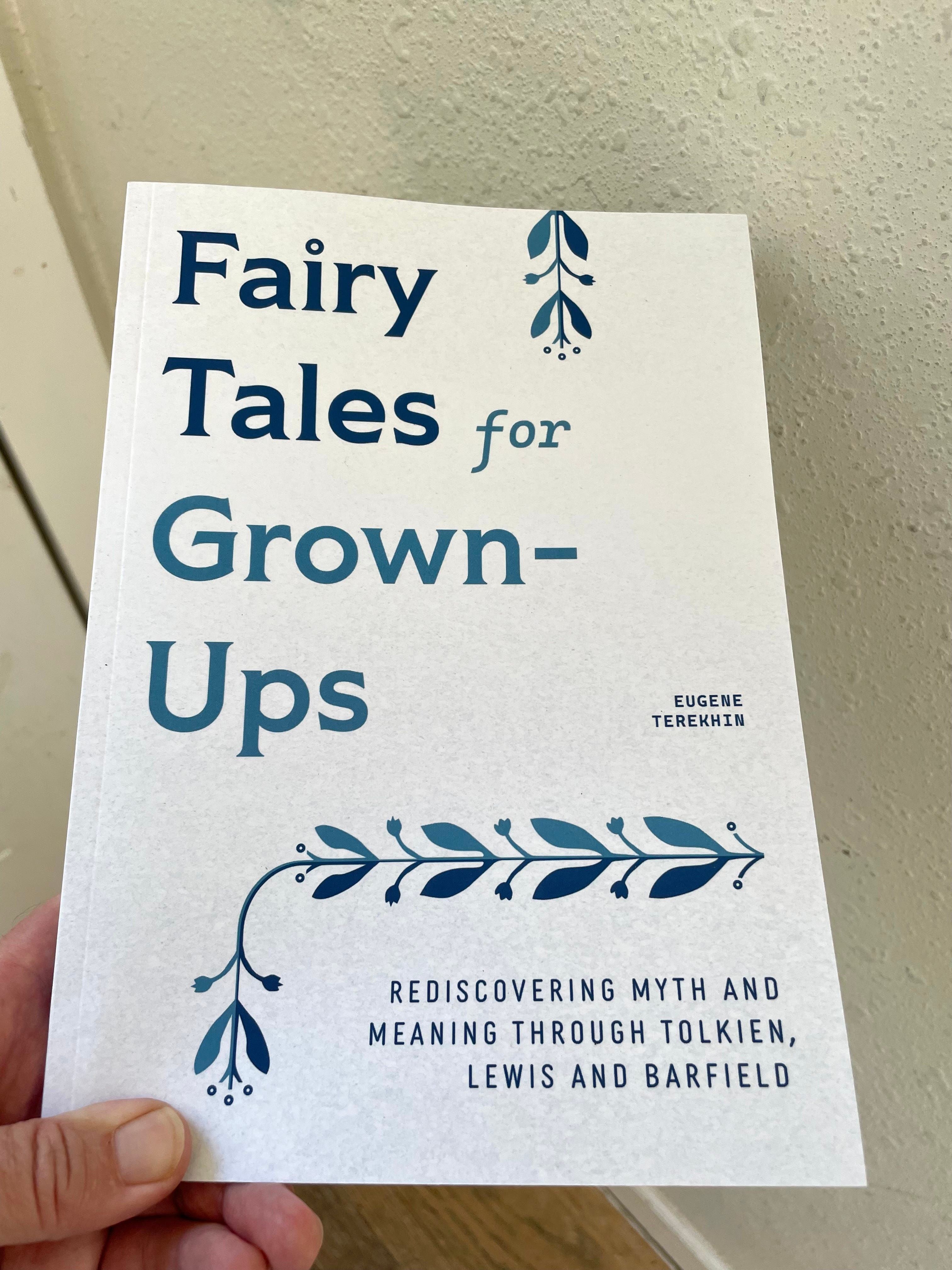
PS — Check out Eugene’s book Fairy Tales for Grown-Ups: Rediscovering Myth and Meaning through Tolkien, Lewis, and Barfield.
Available on Amazon or his website.
PPS - Don’t forget to sign up for Eugene’s newsletter, Philosophy of Language here.
We do not use AI images with our writing. We prefer to feature and provide more exposure for human artists. If you know of a great piece of art we should consider, please leave a comment with a link to it. All featured images are properly attributed with backlinks to the artist’s website. You can help support human artists and push back against AI by liking or restacking this piece by clicking the “Like” icon ❤️, by clicking the “Restack” icon 🔁 (or by leaving a comment).