
The Strange Reason True Things Rarely Appear on the First Page of Google
Google search is pretty good at finding what we are looking for. Or is it? One of the strangest truths of existence is that true things are hard to find. If they are easy to find, they are likely not

We have another post today by Eugene Terekhin, the man and the mind behind the publication Philosophy of Language.
Eugene is a regular contributing writer to The BoldBrush Letter.
This article will be locked in two days for paying members only.
From our Sponsor:
For Serious Artists: Get The Attention Your Art Deserves

Have you ever wished you could work with a website host that seriously promoted your art?
That’s exactly our new FASO Diamond plan.
We’ll promote your art to thousands and thousands of art lovers
via email and social media over the course of 2026.
This is essentially the same promotion we do with our signature artists and worth over $7,000, but will cost only $3,000/year.
But, to celebrate our 25th anniversary, we only have TWO (2) introductory slots left at 40% off for only $1,800 (includes both the website and the promotion).
We can’t accept everyone so, if your art is ready for prime-time, and you’re serious about your art career, then click here to apply for one of the remaining 15 spots.
Feature Article:
The Strange Reason True Things Rarely Appear on the First Page of Google
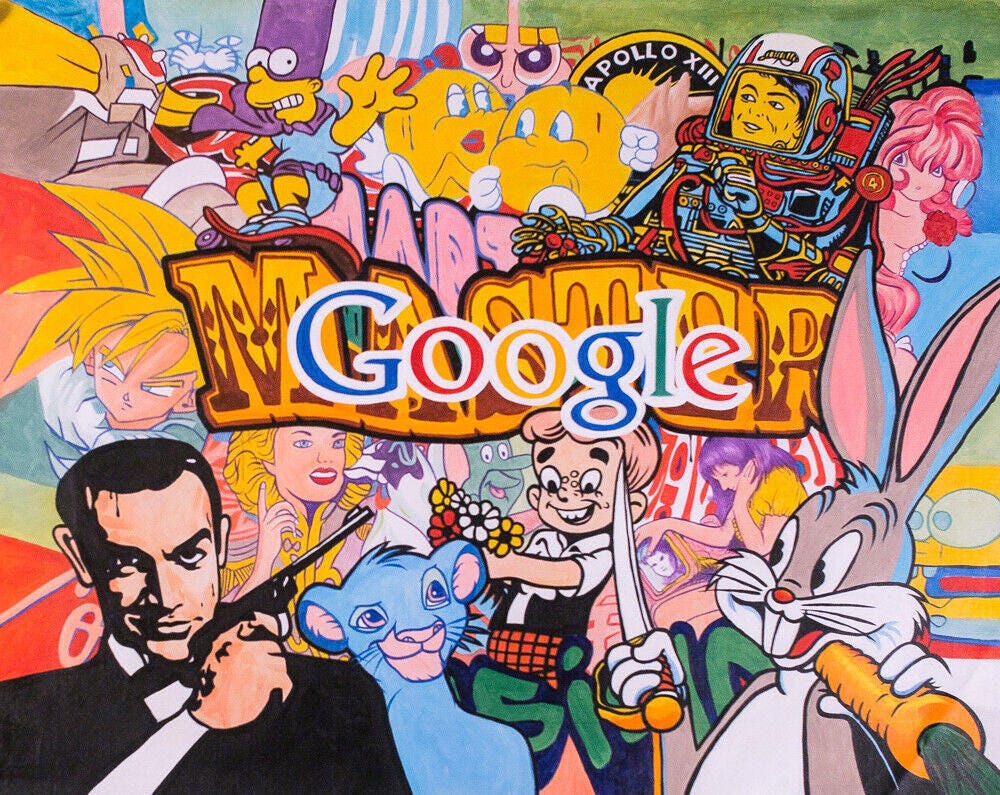
Google search is pretty good at finding what we are looking for. Or is it?
One of the strangest truths of existence is that true things are hard to find. If they are easy to find, they are likely not true. True things are rare. If something is true, it’s usually one-of-a-kind.
Google’s algorithm searches based on frequency statistics: the more frequently people search for a website, the more likely it is to appear in the results. That’s how Google knows what’s in demand – search frequency.
And yet, the most important things in life do not show up on the first page of Google results. If we want true things, we must look somewhere else. True things aren’t found statistically. They are found by recognition. True things call – and are found by the particular resonance they awaken in the soul.
True things search for us – they call us by producing a certain sound within. Recognition of that sound simply happens. Just as Dante Alighieri chanced upon Beatrice on the Ponte Vecchio and immediately recognized that gaze, so we recognize the sound of truth when we encounter it. It sounds like nothing else in the world.
We know that it has happened by the happiness we feel.
Interestingly, the verb happen comes from the Middle English hap, meaning chance or fortune. The same root lies behind the word happiness. In other words, when hap – luck or good fortune – happens, we experience happiness.
Dante recognized his hap when he happened upon Beatrice and suddenly realized that he was happy. What is true appears only once: in a particular place, at a particular time, to a particular person – and never again in quite the same way.
That is why algorithms are very good at finding the average but very bad at finding the true.
Meaning doesn’t repeat. It is theophany – and God never appears in the same way twice. You cannot point to something and say, “Since this thing appears frequently, it must be meaningful.” When you hear a child’s laughter and suddenly feel joy, you know it is something exceptional – it does not happen every day. If it did, it would not have moved you.
Curiously, the word “hap” originates from Old Norse happ and is related to Old English hæppan, which means “to move accidentally.” True luck – true happiness – happens only as something unexpected.
If something can be statistically predicted and easily found, it is not what we are really looking for. We are looking for the rare, the unexpected, the hap – something that looks for us.
As Rumi said,
“What you seek is seeking you.”
What we seek lies beyond statistics. We long for a one-of-a-kind encounter. Only then will we be truly surprised by joy. Joy is not searchable; we cannot find it by looking for it. It is as rare as God Himself. It comes to us as a total surprise, at the moment we become conscious of being sought.
When we grow sensitive to rare things, true things begin to happen. Suddenly, we lift our eyes somewhere on the Ponte Vecchio and happen upon a gaze that turns the world upside down.
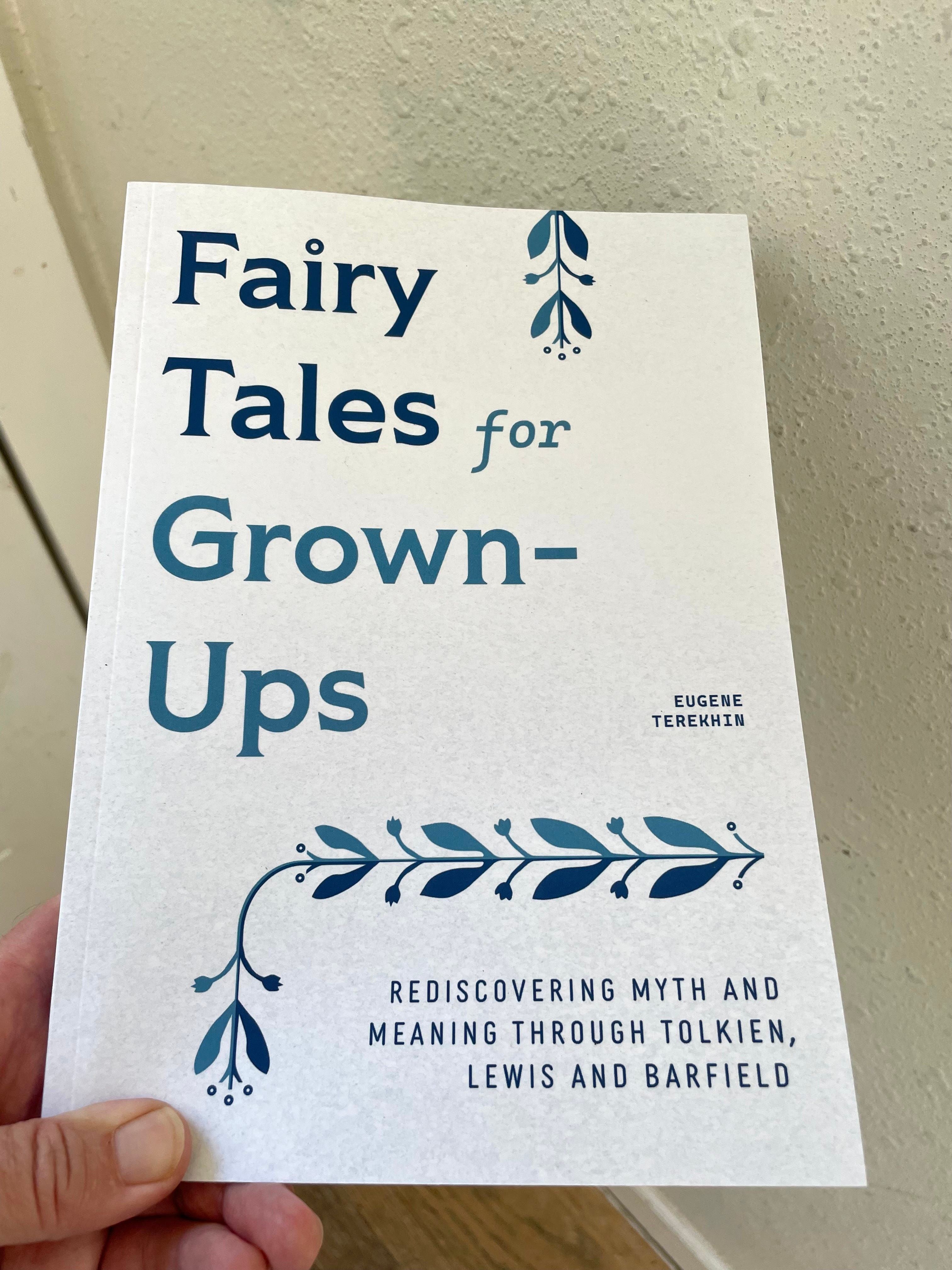
PS — Check out Eugene’s new book Fairy Tales for Grown-Ups: Rediscovering Myth and Meaning through Tolkien, Lewis, and Barfield.
Available on Amazon or his website.
PPS - Don’t forget to sign up for Eugene’s newsletter, Philosophy of Language here.
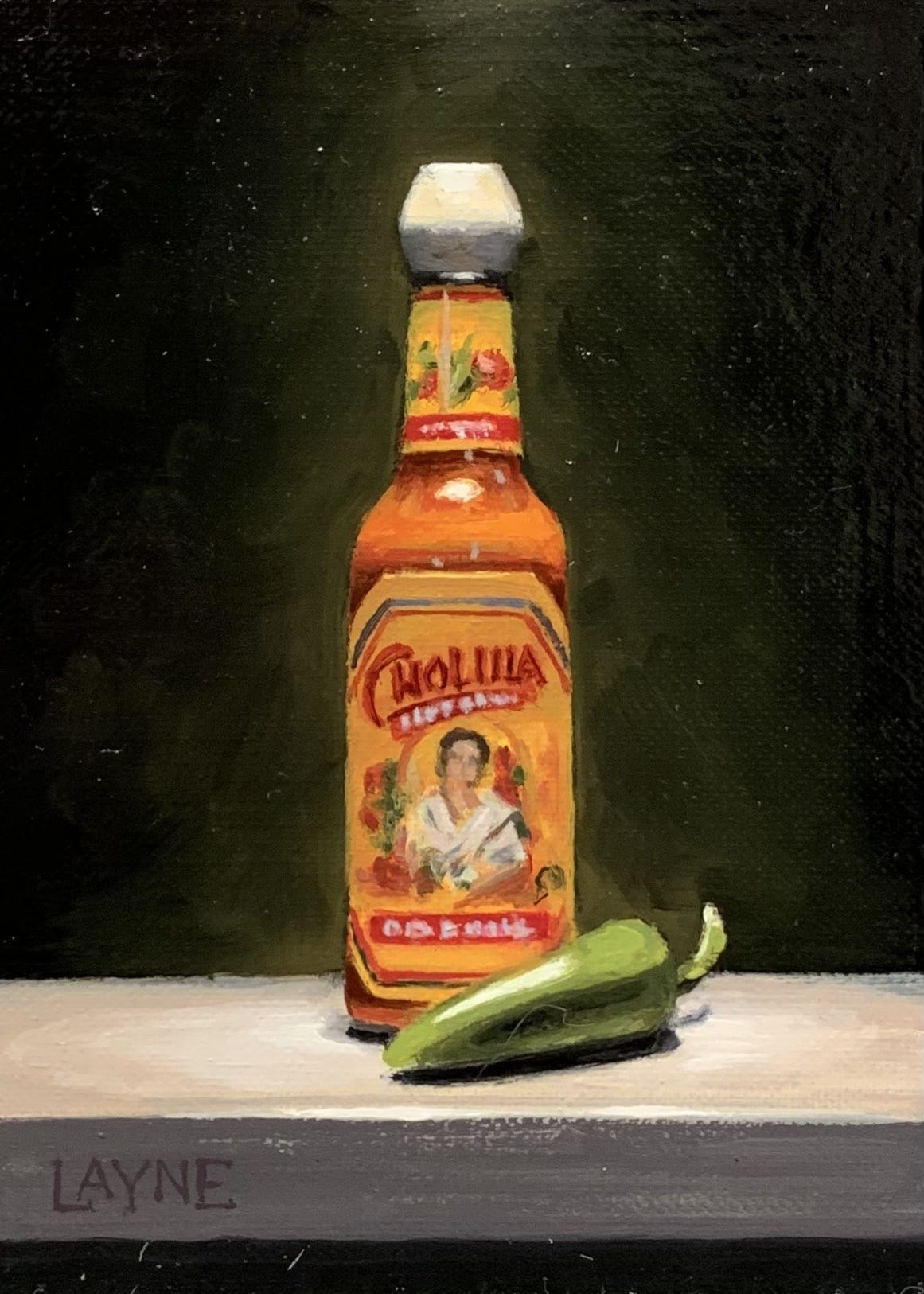
FASO Loves Eric Layne’s paintings
Wouldn’t You Love to work with a website hosting company that actually promotes their artists?
As you can see, at FASO, we actually do, and,
we are the only website host we know of that does.
Click the button below to start working
with an art website host that actually cares about art.
PS - If you prefer Squarespace websites, you should check out our Artful Square offering. We can generally save artists money, unlock extra features, and we promote our Squarespace artists too!
No AI Zone: Everything written in this post (and all our posts) is written 100% by flesh and blood humans
We do not use AI images with our writing. We prefer to feature and provide more exposure for human artists. If you know of a great piece of art we should consider, please leave a comment with a link to it. All featured images are properly attributed with backlinks to the artist’s website. You can help support human artists and push back against AI by liking or restacking this piece by clicking the “Like” icon ❤️, by clicking the “Restack” icon 🔁 (or by leaving a comment).
The harder I work, the luckier I get!
Great insight! And now that asking Google brings up an AI response first, it's even less trustworthy.