
The Two Economies
Don’t confuse the currency of the market with the currency of the soul

This piece originally appeared on my personal Substack, Clinsights, here.
Editor’s Note: In two days, this post will be locked and is available only to paid members because we don’t want this duplicate content on the open web in a way that might draw traffic away from the original post. You can always read the entire post here.
If you wish to comment on this piece, we are accepting comments on the original post here.
The Two Economies
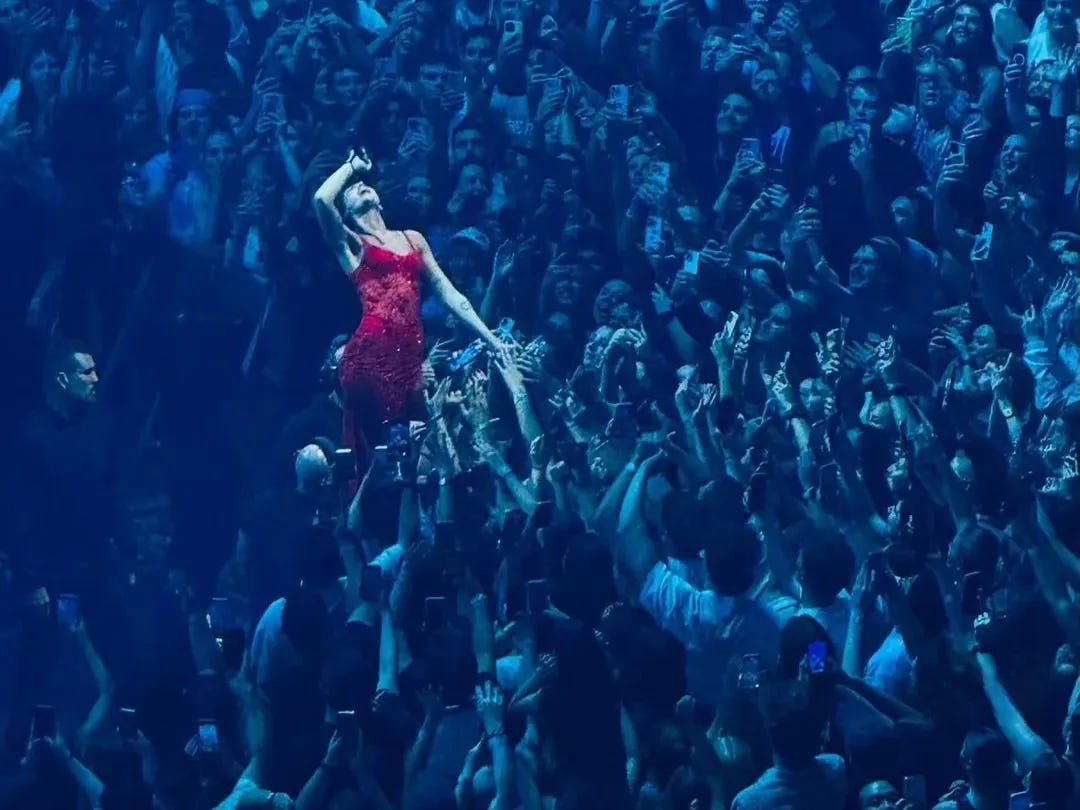
There isn’t just one master “economy.” There are two economies, and they are vastly different. Let’s call them the following: the soul-economy and the market-economy.
The currency of the soul is love, and the currency of the market is power (ie wealth). The market-economy is mastered with ambition. The soul-economy is mastered with inspiration. Success in the market-economy takes discipline. Success in the soul-economy takes devotion. The goal in the market-economy is getting. The goal in the soul-economy is giving. Guess in which economy Art properly belongs?
People who begin to meditate often worry they’ll lose their ambition; their drive. In a way, they will, but only because, as they begin to see with more clarity, they’ll begin to shift their focus from the market-economy to the far more fulfilling soul-economy.
So, it’s not that people “on the path” lose the drive to do anything. It’s that their ambition slowly gives way to inspiration. And that is why, despite being less outwardly ambitious, creative, spiritual people often accomplish more, not only in the soul-economy, but also in the market-economy (as a side-effect). As they evolve, they stop being driven by ambition and discipline, and they start being driven by inspiration and devotion. And devotion beats discipline every time. From the outside, they may still appear to be “ambitious,” but their internal motivation has completely changed.
More specifically, for our endeavors as artists, writers and musicians: Our Art, our works of love, are properly meant for the soul-economy. Only labors of will, born from discipline, are children of the market-economy.
Art, music, writing – these are all works of love and they are meant to be gifts of love in the economy of the soul. That is why the worst thing an artist can do is “sell out” their soul to the market.
Don’t misunderstand: I am not suggesting that artists cannot sell their artworks or make a living from their art. Selling is not the same thing as selling out. Selling out involves creating primarily for the market-economy with the goal of getting. Art must be made as a gift of the soul, for the purpose of giving.
Artists must learn to navigate these difficult waters of balance. They must learn to stand at the edge and straddle these two vastly different economies. Learning the difference will enhance both the artist’s peace of mind and his pocketbook. Knowing the difference between these two economies will help an artist to not feel rejected when a soulful piece doesn’t sell. And, it will help him understand why some pieces sell easily and others do not.
Here’s an important point to remember:
The most valuable piece of art in the soul-economy may be worth nothing in the market-economy and visa-versa.
Consider the lyrics of the song, Spirit of Radio by Rush, a song you’ve probably heard many times on the radio for free, and probably not ever paid a dime for:
Invisible airwaves crackle with life
Bright antennas bristle with the energy
Emotional feedback on a timeless wavelength
Bearing a gift beyond price, almost free
That last lyric describes music as a priceless gift in the soul-economy, while also acknowledging that the work is worth almost nothing to the market-economy. It is the same with the majority of art created. It is difficult to put a price on the priceless.
Artists, to navigate modernity, must somehow bring love into the market-economy, and they must bring money into the soul-economy. This is a tricky, though possible, balance.
Here’s an illuminating story from Lewis Hyde’s book, The Gift,
“There are three gifts in this hunting ritual: the forest gives to the hunters, the hunters to the priests, and the priests to the forest. At the end, the gift moves from the third party back to the first. The ceremony that the priests perform is called whangai hau, which means “nourishing hau,” feeding the spirit.”
Art must also feed the spirit from whence Art comes. In reading that passage, it dawns on me, that the soul-economy of Art works the same way, and there are actually three entities one must consider: The artist, the perceiver, and God. And the key to understanding the soul-economy is to understand that the “job” of each entity is to gift something to the others. As we discussed in Attention is Energy, the only way for attention to be valuable is to give it away.
God gifts the creative talent and inspiration to the artist, the artist gifts the Art itself to the world in general, and to the perceiver specifically, and, if the perceiver allows his heart to open enough to accept the gift, eros will arm his bow, and fire his arrow of beauty with unerring accuracy, inflicting upon the perceiver the divine wound of wonder, which causes the perceiver’s soul to grow. The perceiver’s gift back to God is his soul-growth resulting from the Art, which completes the loop of love upon which the soul-economy thrives.
The goal of each economy made clear by its name: The market-economy seeks the growth of markets and the soul-economy seeks the growth of souls. Give to Caesar what is Caesar’s and give to God what is God’s and everything will work out.
Art, as a linchpin of the soul-economy, is a vector for the growth of souls. This is how awareness spreads. This is how The Kingdom grows. And joy is the feeling of the soul’s realization that it is free, and may, in every moment, reach toward its true home in God.
Labor is what we do to live. Work is what creates a world that outlives us.”
— Hannah Arendt
PS - Check out the Spirit of Radio Video on Rush’s Youtube channel (linked below), and give thanks for the magic of music and the incredible contributions of countless humans it pays tribute to who worked so hard to bring it into your life for free, a gift from their souls to yours.

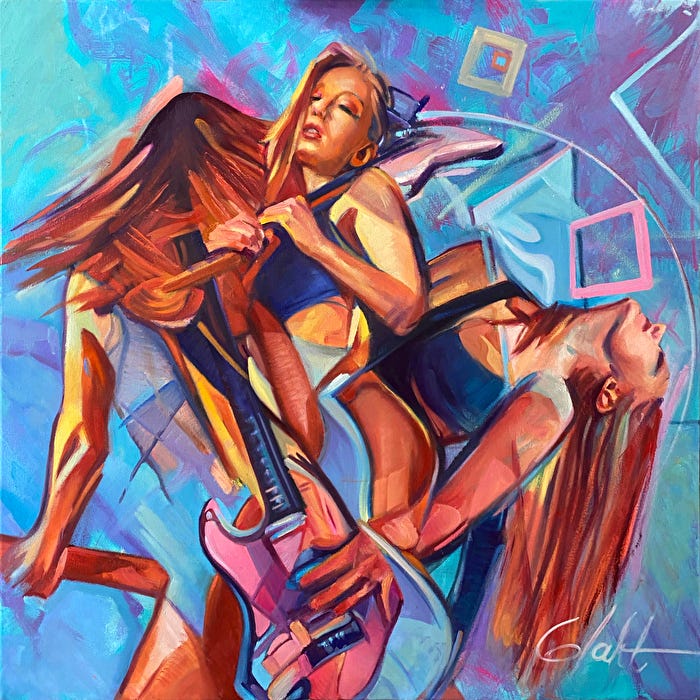
FASO Loves Greg Lahti’s paintings
Wouldn’t You Love to work with a website hosting company that actually promotes their artists?
As you can see, at FASO, we actually do, and,
we are the only website host we know of that does.
Click the button below to start working
with an art website host that actually cares about art.
PS - If you prefer Squarespace websites, you should check out our FASO Artful Square. We can generally save artists money, unlock extra features, and we promote our Squarespace artists too! Please note, there is a lot of confusion about our Squarespace offering. It is a separate either/or offering. You DO NOT need a FASO website to work with us on your Squarespace website.
No AI Zone: Everything written in this post (and all our posts) is written 100% by flesh and blood humans
We do not use AI images with our writing. We prefer to feature and provide more exposure for human artists. If you know of a great piece of art we should consider, please leave a comment with a link to it. All featured images are properly attributed with backlinks to the artist’s website. You can help support human artists and push back against AI by liking or restacking this piece by clicking the “Like” icon ❤️, by clicking the “Restack” icon 🔁 (or by leaving a comment).
I enjoyed reading this today. It reminds me of how I have operated my two School of Rock locations - not out of a quest for money but rather to serve the community. The money follows and is secondary. As I now turn towards art full time, this resonates with me even more.