Welcome to 2112
Meet me in the cave behind the waterfall. Bring your guitar, bring your paint brushes, bring your pens, for Art is the only thing that can save us.

This piece is near the email length limit, I suggest you read the original here
This piece originally appeared on my personal Substack, Clinsights, here.
Editor’s Note: In two days, this post will be locked and is available only to paid members because we don’t want this duplicate content on the open web in a way that might draw traffic away from the original post. You can always read the entire post here.
If you wish to comment on this piece, we are accepting comments on the original post here.
Welcome to 2112
🎵 And the meek shall inherit the earth.
We are at our most human and least programmable during the creative act – and thus, the masters of modernity must purge us of the dangerous desire to create.
Welcome to 2112.
The system is winning and the attempted purge of creativity is underway.
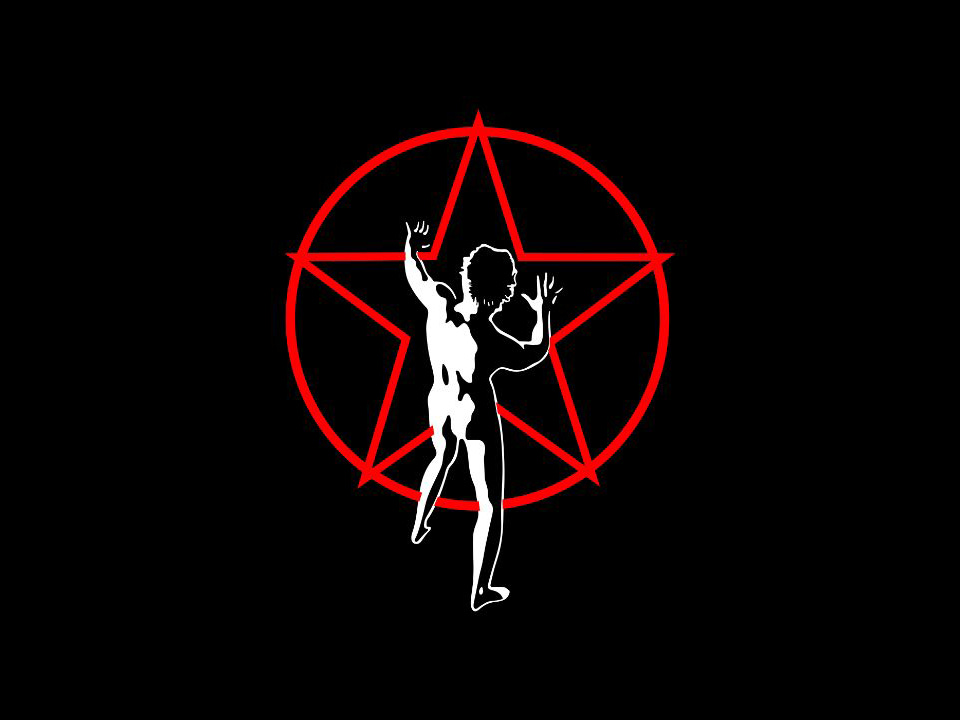
In the 1970’s, Rush, the band, foretold a future dystopian society in their epic rock suite, 2112 — a future vision that, increasingly, matches our present. 2112 appears to be arriving almost a century early. Rush sang of an oppressive world governed by the “Solar Federation” and the iron-fisted “priests” of the “Temples of Syrinx” who controlled everything the people read, the songs they heard, and the art they viewed.
In the lyrics of this epic rock suite, arranged like a classical work, we learn of “massive grey walls” holding “great computers that fill the hallowed halls.” These computers create and control all of the art. The “priests” sing, “We’ve taken care of everything, the words you hear, the songs you sing, the pictures that give pleasure to your eyes.”
Then they boast that the people “never need to wonder how or why” this art is made. By abusing their monopoly on art; on media, they have the power to control even what the people think: The oldest ambition of authoritarians everywhere — our very thoughts, provided by our masters, free of charge. They rule while we amuse ourselves to death.
And then they tell the big lie that authoritarians and dogmatists always tell:
“All the gifts of life are held within our walls.” – The big lie of priests of the Temple of Syrinx, Rush, 2112
The album notes add further details to the story (a feature, I will note, that you do not enjoy when streaming your music from one of their ̶d̶a̶t̶a̶-̶c̶e̶n̶t̶e̶r̶s̶ temples):
…The massive grey walls of the Temples rise from the Heart of every Federation city. I have always been awed by them, to think that every single facet of every life is regulated and directed from within! Our books, our music, our work and play are all looked after by the benevolent wisdom of the priests…
Doesn’t that sound like our world? Doesn’t that sound like AI? Doesn’t that sound like modern social media? Doesn’t that sound like the “temples” we are building now, as fast as we can, “in every Federation city,” in the race to construct countless ugly grey data centers?
Why are their temples so ugly? Why do the “priests” “worship” in hideous boxes made of massive grey walls?
Rebellious Thoughts provides the answer in his excellent essay, Beauty Will Save the World:
beauty is inherently dangerous to any system built on the machinery of extraction. A person who can be moved to tears by the slant of light in a forest or the devastating precision of a cello suite or the supreme sound of a qawwal is a person who cannot be fully bought. They have tasted a value that does not submit to the market. They have found a source of gravity that exists outside the state.
Our deep desire to become fully human through communion with The Divine is why we appreciate and create Beauty. It is why we create Art. It is why we create religion. It is why we Create. And false priests can’t allow us to commune with real gods; for that would break the thrall of their illusion.
The desire to create sets humanity apart — even animals work for their food, entertain themselves, and pair off in sexual relationships. But only humans create Moonlight Sonata, Starry Night, holidays, family dinners, homes full of love, and The Golden Gate bridge. Only humans build la Sagrada Família and a multitude of other cathedrals to honor a God they can neither see nor hear, but can most definitely feel.
In the strictest, most “rational,” sense, nobody needs “Moonlight Sonata.” It’s “just” a combination of sounds. This is the argument that the “priests” of the “Temples of Syrinx” hope that you will buy.
But our souls do need such things. We may not see or hear God, but when we create; when we truly experience Art, we feel the Divine. These soul-creations are needed to kindle the love inside us; the love of each other; the love of the divine which, even in dystopia, we distantly remember. And, in feeling this love, we fleetingly remember what we truly are; who we truly are.
This remembrance is what the protagonist in 2112 feels, viscerally, when he stumbles across an ancient guitar, hidden in a cave behind a waterfall:
What can this strange device be?
When I touch it, it gives forth a sound
It’s got wires that vibrate, and give music
What can this thing be that I found?See how it sings like a sad heart
And joyously screams out its pain
Sounds that build high like a mountain
Or notes that fall gently, like rain.I can’t wait to share this new wonder
The people will all see its light
Let them all make their own music
The Priests praise my name on this night.
But then, just as many of us are doing, the protagonist makes a terrible mistake, foreshadowed by the last line. In his excitement, still believing in “the system,” he takes the guitar to the “priests,” who promptly destroy it. They know the danger it represents to their control. In their dystopia, people must not be allowed to make their own Art. That would awaken too much inside of their souls.
The protagonist, disillusioned by the priests’ destruction of the guitar, awakens to the terrible truth of his reality. Heartbroken, and unable to make music, the protagonist returns home. He sleeps, and he dreams of the beautiful world of the ancient elder race (a metaphor for artists) that existed before the “priests” took control of the planet. When he awakes, his heartbreak overcomes him, and he returns to the cave where he found the guitar. He laments never knowing the art-filled world of the elder race before committing suicide. Without true Art and Beauty in his life, he can’t imagine continuing.
Beauty will save the world; Art will save the world, but, we cannot expect it to do so from within the system the “priests” have built. They will suppress and destroy it.
Paul Kingsnorth, author of Against the Machine: On the Unmaking of Humanity, calls the modern system The Machine. And he recently admitted that, he too, had made the same mistake as the protagonist in 2112:
One of my readers told me that I had made the mistake of trying to fight the Machine head on. This, he said, is like trying to go to war with the Devil. It will never end well. The best tactic is rather to fight the Machine in ways the Machine does not notice. My friend Martin Shaw tells me that the old myths always recommend this. You don’t look at the Gorgon head on. You need a polished shield before you can deal with her. [source]
In making our sand castles, our Art, out of the same dirt of the earth of which we are made, we distantly remember that our souls are made of the one who created the dust of the cosmos. So, to create is to be human; to create is to awaken – is it any wonder that those who wish for us to remain asleep are promising that their machines can do the creating, and the thinking, for us?
To deny this need to create, as so many of us do in modernity, is to deny our true Self. Put another way, to deny this need to create is to choose to remain asleep. To deny this need to create is to deny the love in our heart.
Artists, the modern mages, have the power to fight back against The Machine; against the “priests;” against the “grey temples.” However, when we do so, let us not make the same mistake of running to those same priests to show off our new guitar music. Let us beam these energizing spells of light directly to one another. Let us engage each other in ways that seem, to the “priests,” not worth noticing, until it is too late; until too many of us have awakened.
If we can put our trust, once again, in the Divine; in the Earth; in Beauty; and in Art then, perhaps, the day will come, as it does at the end of 2112, when the artists reassert control.
In the final act, we learn that the protagonist’s dream had, somehow, mystically, reached across the galaxy where, far away from the dystopian, controlling “priests,” the elder race of artists had grown powerful — they had awakened.
And the meek shall inherit the earth.
Realizing that their home world needed saving through the beauty of their Art, the “elder race”, the Artists, the “meek”, return to earth, triumphantly, and announce to the masters of “The Solar Federation,” the “priests,” that they, the artists; the mystics; the lovers; the humans have (re)assumed control of the Art, their world, and their destiny. They are meek, not because they are weak, but because they refused to sully their souls by resorting to the tactics of their oppressors; they refused to “fight” at all. The meek, once they awaken, contain powerful souls of light that the oppressors could not stand before. And, like them, we, if we hold fast to our souls, may one day say to the “priests” of the machine:
Attention all Planets of the Solar Federation
We have assumed control.
We have assumed control.
We have assumed control.
Do not let the “Red Star;” the machine; the spirit of antichrist; the “priests,” control you. Like Rush’s “Starman,” you are made of divine stardust and, like him, you have the power to push away the false “Red Star” of this world. And that power to resist starts with Art; real art; human art.
Meet me in the cave behind the waterfall, I’ll bring my guitar.
PS - I listened to Rush nearly every day as a young teenager, and 2112 was a perennial favorite of mine. I hadn’t thought about it in many years though until this recent Substack Note by skt_d:
PPS - If you like rock music, do yourself a favor: Set aside twenty minutes to listen to 2112 in its full symphonic glory. My understanding is that it was written as a giant “screw you” to the record label, who wanted to control the content of Rush’s music. I assume the “priests” in the song represented the record label. Ironically, 2112 became a huge hit, probably saving Rush’s career, allowing the band, like the elder race in the song, to assume control of their destiny. And because Rush is a badass band, they’ve helpfully provided the 2112 album liner notes on their website so you can follow along as you listen to the entire story: https://www.rush.com/songs/2112/