

The FASO Way newsletter — exploring how to thrive as an artist in the age of AI
We have another post today by Eugene Terekhin, the man and the mind behind the publication Philosophy of Language.
Eugene is a regular contributing writer to The FASO Way.
This article will be locked in two days for paying members only.
Feature Article:
When the Artist Vanishes, Art Appears
What surprises me the most about great people is that they are usually unaware that they are great.
I remember watching an interview with J.R.R. Tolkien about The Lord of the Rings and thinking, “Goodness, he looks, behaves, and speaks just like my grandfather.”
There wasn’t the slightest hint of pretense, not a trace of, “I am the author of the greatest book of the twentieth century.”
He was simply a man who had seen something and wanted to share it with others, thereby deepening his own joy.
True artists aren’t necessarily aware of what they are doing.
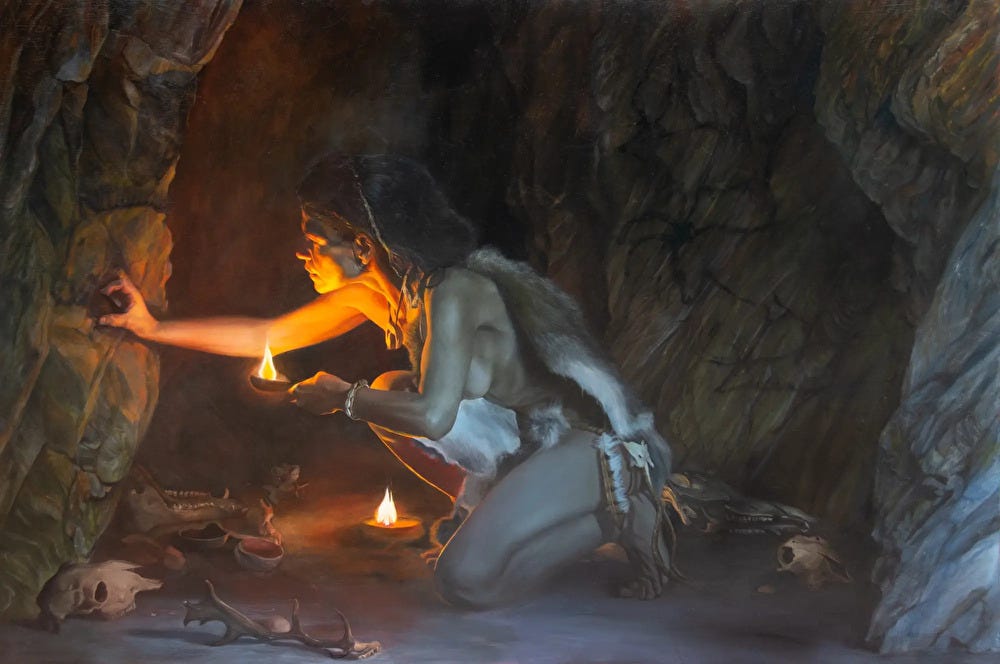
As Rupert Sheldrake says in one of his interviews, when you look at ancient cave paintings, you don’t think, “What a great artist!”
Instead, you think, “Whoever painted this buffalo being chased by hunters truly captured the spirit of the hunt.”
Above all, cave paintings invite us to enter the scene, not to admire the artist.
According to Rupert Sheldrake, somewhere during the Renaissance, a shift happened in our understanding of what art is.
Ancient art was not about the artist. It was not about a separate individual depicting objective scenes from life while remaining a detached observer.
It was about expressing the experience of being one with the Spirit embodied in the painting. It invited the viewer to participate in something greater than themselves.
Great art calls us to participate in the greatness it depicts.
Poor art is all about the skill of the artist.
As Rupert Sheldrake points out, when you walk through the halls of the British Museum, you hear people admiring the artists but rarely worshiping the sacred.
They speak of exquisite technique, masterful composition, brilliant color, and distinctive style, yet rarely—if ever—do you see them dance with the Muses.
Modern consciousness simply does not allow for that. Somewhere in the distant part, a chasm was fixed between the observer and the observed. A chasm of non-participation.
As a result, we no longer experience a painting as a doorway into a temple where we join the dance of the Muses by dancing with them. We simply observe from the outside and comment on the technical excellence of the piece.
In true art, the artist isn’t aware that they are doing art. The word “art” itself comes from the Proto-Indo-European root *ar-, which means “to fit together,” “harmonize.”
In fact, the word “harmonize” comes from the same ancient root – *ar.
The artist is a harmonizer—someone who catches and expresses harmonies between heaven and earth.
They are not pursuing self-expression. The self is too small to draw art out of us. The artist pursues the dance of the invisible Spirit behind the Alpine meadows, mountains, rivers, and faces they portray.
Therefore, when we see their art, we perceive the harmony between heaven and earth, and we are moved to worship: take off our hats, take off our shoes, fall into silent meditation. We write a poem, sing a song, weep, or, like King David, dance the dance of joy before the Ark of God.
True museums are temples – places where you engage with the sacred, experience harmony between heaven and earth, and perform some form of joyous dance before the Revelation of Divine Presence.
❤️ Please click the Like button—the little heart icon at the top and bottom—if you believe the greatest art does more than display the artist’s skill—it invites us through the canvas, into the sacred, and perhaps even into the dance of the Muses. Your click helps more artists and art lovers enter that dance—and helps us better promote the arts to those who need support. Or, even better, leave a comment:
PS — Note from Clint: One of the reasons I built FASO is because I believe art is important, artists are important, and the work you’re called to create deserves to be taken seriously. We are all sharing “miracles of existence” through our art.
Yes, at FASO, we build professional artist websites. Yes, we talk about marketing. Yes, we give artists tools to present their work, tell their stories, reach collectors, and sell more art.
But that is the how.
The why is that we love art, and we want to push back against a world that too often treats art like content and artists like algorithms. The modern world denigrates Beauty in preference of profit and efficiency. At FASO, we hold Beauty sacred.
So we don’t just host artist websites. We promote artists. We feature their work. We try, in our own small way, to help more art find the people who need it. And that informs everything we do and build.
If that resonates with you, we’d be honored to have you join us.
PPS — If you’re not ready to look at FASO, you can support our mission by simply clicking the heart icon at the top or bottom of this article. That helps us reach more artists and art lovers and helps us spread Beauty to a world that is desperate for it.
—Clint
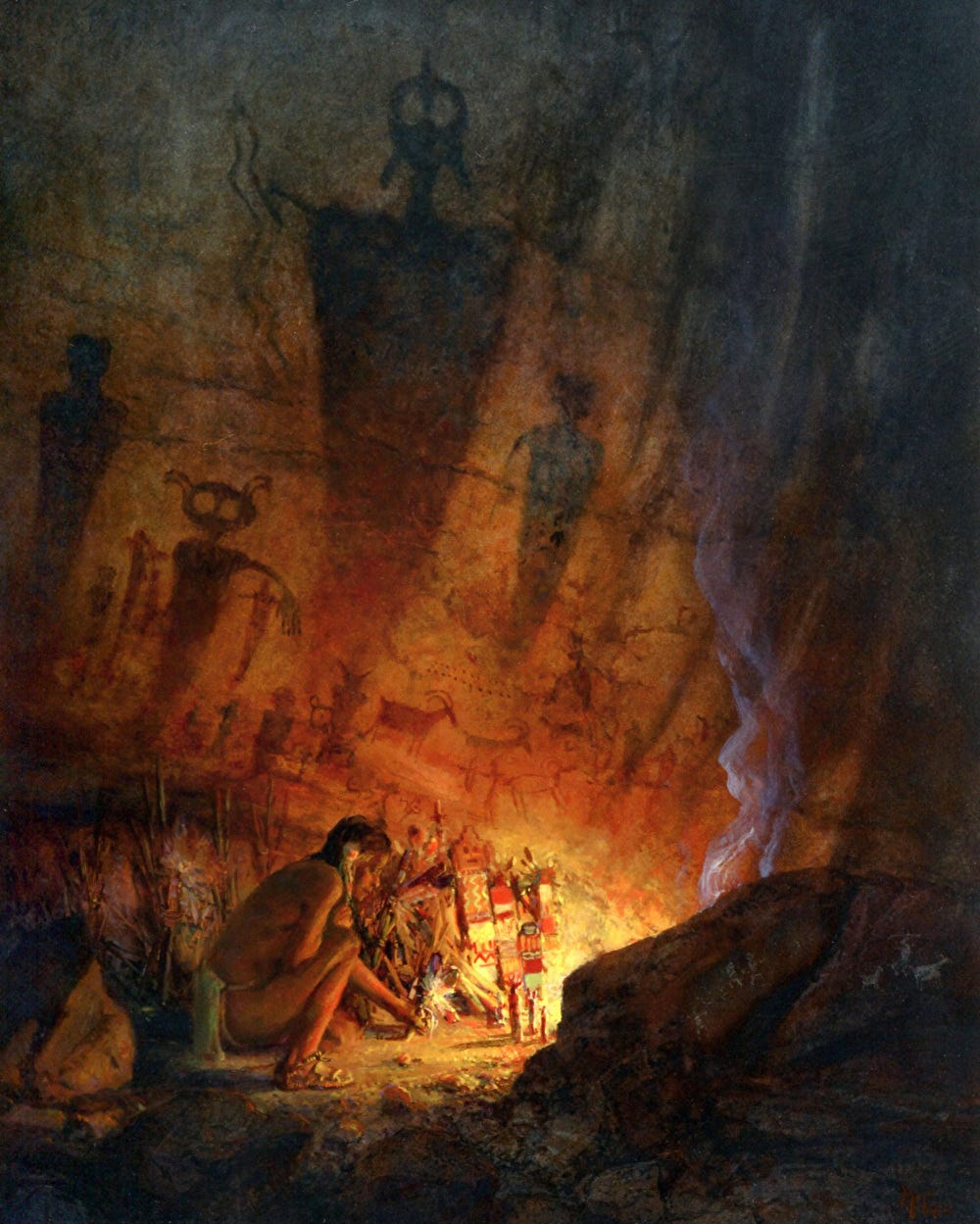
"The purpose of art is not to communicate with the audience. The purpose of art is to still and quiet the mind, and make it receptive to divine influences." John Cage
It’s as if you mind melded with me! Like Mr. Spock. In person who never wanted to write or create art. But later in life finding myself in that place. At 82 now after 15 years of caregiving for my husband who passed away. Now facing my own health challenge.
Who to care for the art and writing. Oh yes! Sacred!
I have a lovely book given to me on the art of the Inuit. Of being so sophisticated. Compared to western art.