
When We Look for Particles, the World Breaks; When We Listen for Music, It Becomes Whole
From wave–particle duality to the art of poetic vision

We have another post today by Eugene Terekhin, the man and the mind behind the publication Philosophy of Language.
Eugene is a regular contributing writer to The BoldBrush Letter.
The original version of this article was published here.
This article will be locked in two days for paying members only.
FASO Loves Patrick Nevin’s paintings
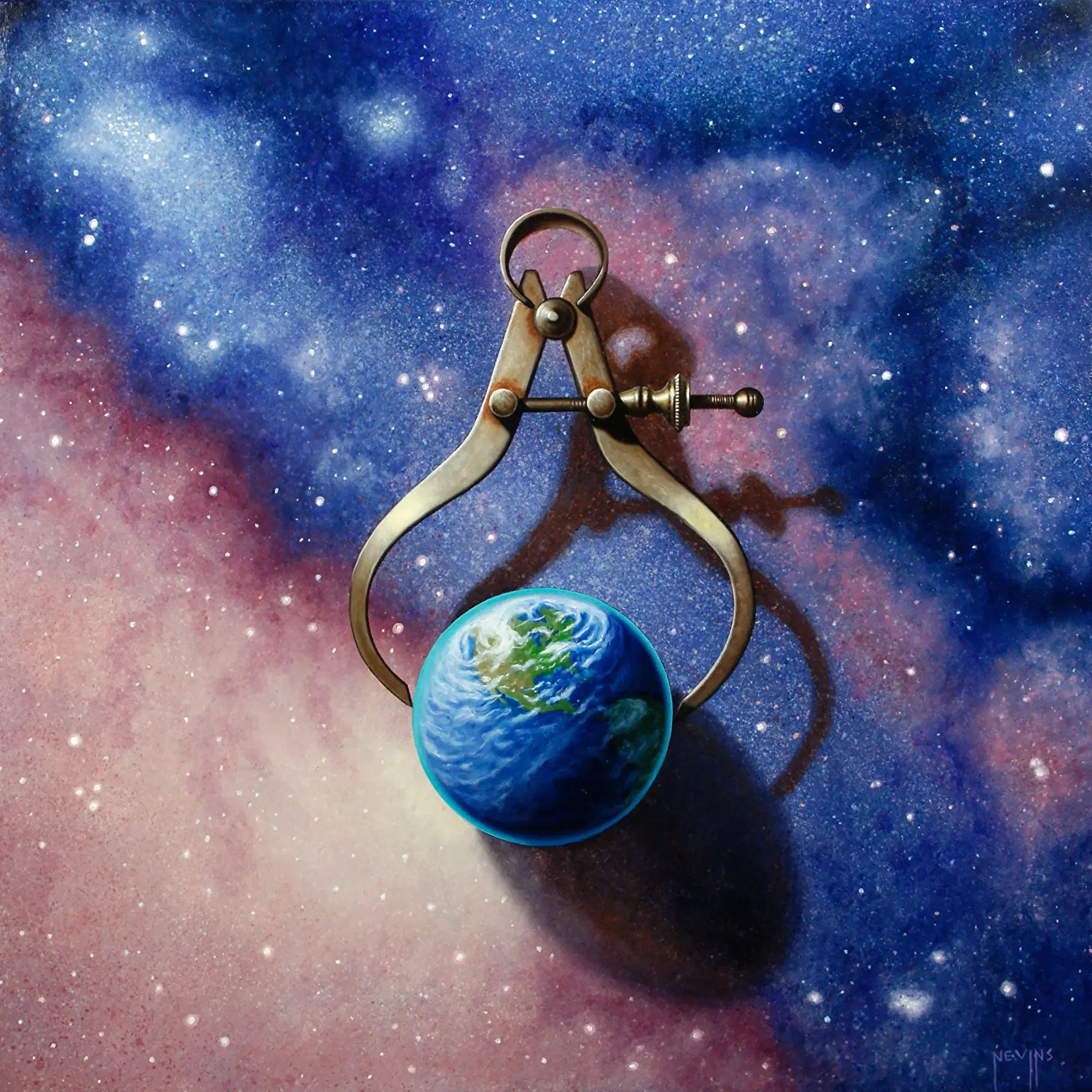
Wouldn’t You Love to work with a website hosting company that actually promotes their artists?
As you can see, at FASO, we actually do, and,
we are the only website host we know of that does.
Click the button below to start working
with an art website host that actually cares about art.
PS - If you prefer Squarespace websites, you should check out our Artful Square offering. We can generally save artists money, unlock extra features, and we promote our Squarespace artists too!
Feature Article:
When We Look for Particles, the World Breaks; When We Listen for Music, It Becomes Whole
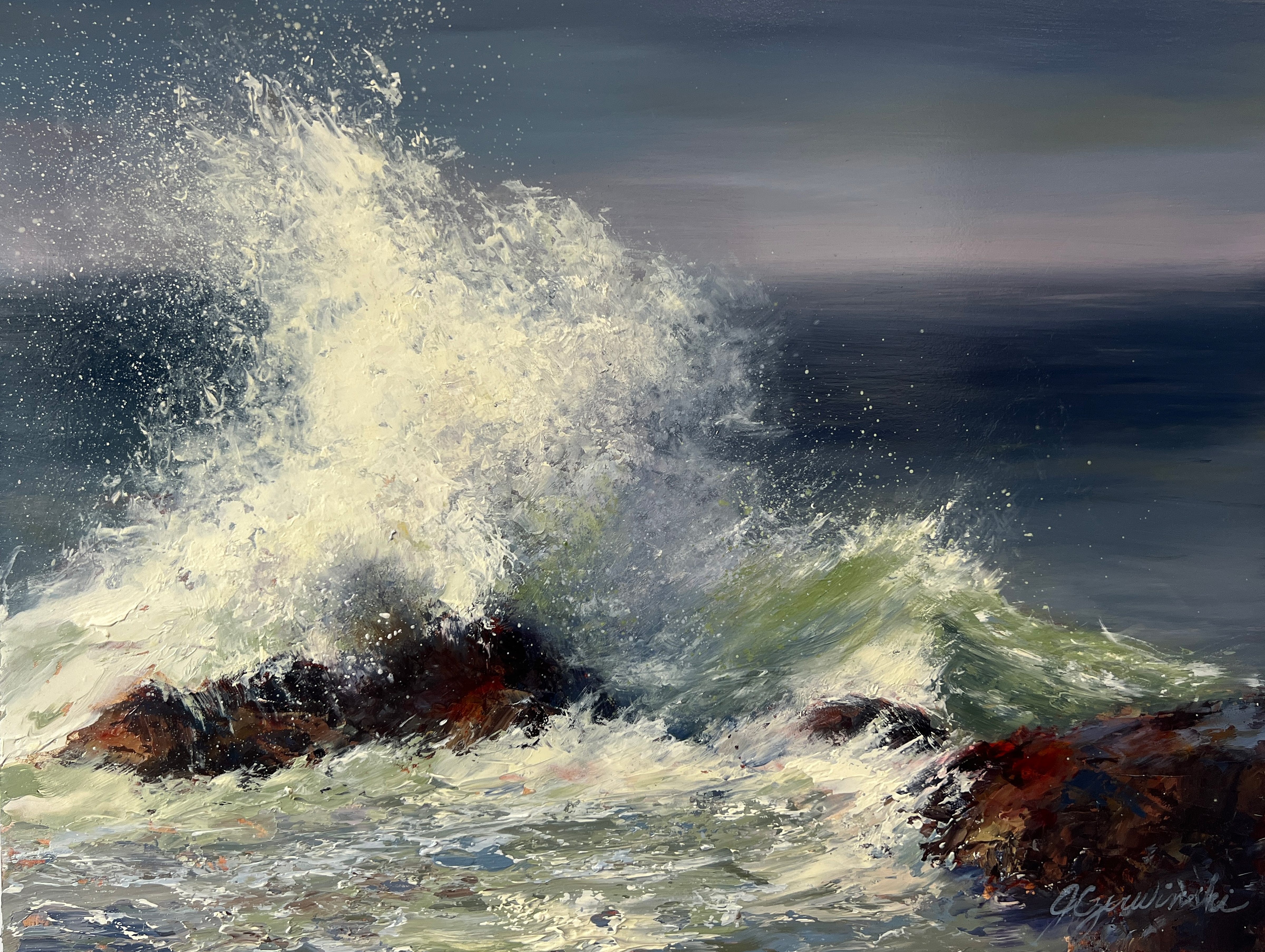
Wave-particle duality is truly fascinating. It’s where physics becomes poetry. When we don’t observe an electron, it behaves like a wave; when we do, it behaves like a particle. Whatever we zero in on becomes discrete — turns into bits and pieces. Whatever we don’t observe behaves like a wave — Music. Why? Physics doesn’t answer that question. Poetry does.
Everything we zero in on becomes fragmented. The fallen mind perceives the world in bits and pieces. It wants to control by analyzing and manipulating. It believes that the whole equals the sum of its parts. It wants to understand the bits and pieces to control the whole. It fails. The Whole is always larger than the sum of its parts.
When we are focused on the parts, reality appears as discrete. It doesn’t yet show us what it is. When we stop zeroing in on its parts, it suddenly changes its behavior and becomes… Music. The Wave. It waves at us so we wake up from the illusion of control and attune to the Music of the Whole.
Is the world a particle or a wave? A particle when we observe it with a view to seeing its parts. And a wave when we stop looking for parts and look for participation. We no longer look at it but through it. The world becomes transparent. We see through it. It is no longer an idol. It is an Icon that reveals to us the mystery of the Whole.
The world is Music from the invisible realm incarnated in its many parts. When we stop looking for parts we begin participating in the Whole. We become artists. When an artist creates art, they may be looking at individual parts of the picture, but they must hear the Music of the Whole at all times — otherwise, no part will come out right.
All artists know that. You must hear the Music first, and then every stroke of your paintbrush will fall in its place. The Whole reveals to us the meaning of each part. We no longer zero in on the part itself to understand the Whole. We focus on the Whole to understand its parts.
When we start with participation, we understand every part. When we start with observing parts, we don’t understand even the parts. When we look AT the world, it is an idol. When we look THROUGH the world, it is an icon. We become perceptive of the Music from beyond the visible realm which gives meaning to each individual part. We realize the world is a huge Parable that opens up to us when we grok the Whole.
Werner Heisenberg said:
“Quantum theory provides us with a striking illustration of the fact that we can fully understand a connection though we can only speak of it in images and parables.”
And Albert Einstein:
“The most beautiful thing we can experience is the mysterious. It is the source of all true art and science.”
Our gaze is magical. If we look to see parts, we will find them. Our gaze will create them. If we look to catch the Wave, we will. When we catch it and ride it, we will participate in the Great Music, and everything around us will become a Parable.
“Don’t you understand this parable? How then will you understand any parable?” Jesus in Mark 4:13
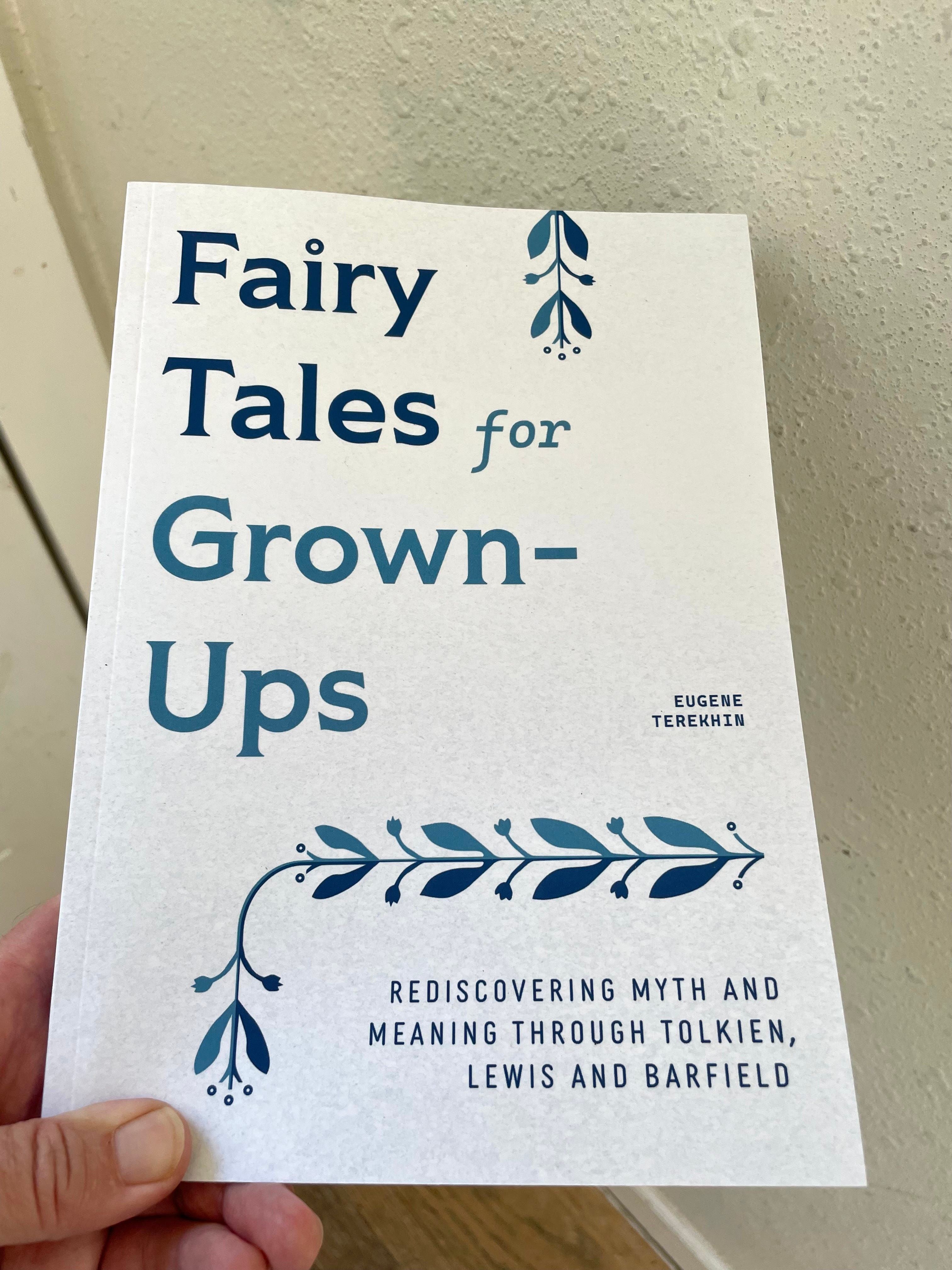
PS — Check out Eugene’s new book Fairy Tales for Grown-Ups: Rediscovering Myth and Meaning through Tolkien, Lewis, and Barfield.
Available on Amazon or his website.
PPS - Don’t forget to sign up for Eugene’s newsletter, Philosophy of Language here.
Clintavo’s Curated Corner
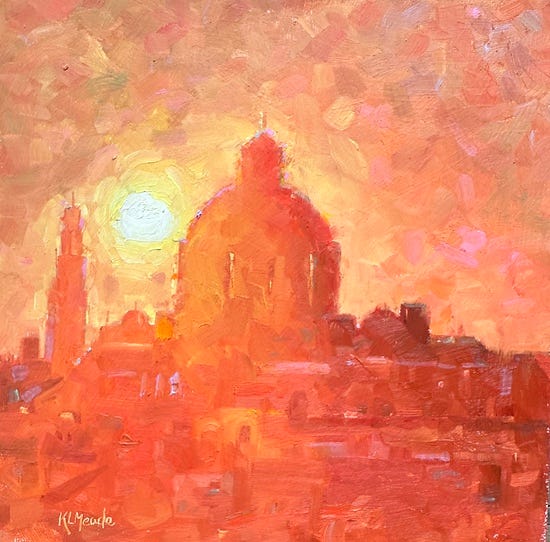
I’ve come across some great pieces recently by FASO artists that are available as prints. Here are a couple of them. These are print on demand pieces available in multiple sizes, formats and affordable price points so this is a great opportunity to support human artists and push back against AI art.
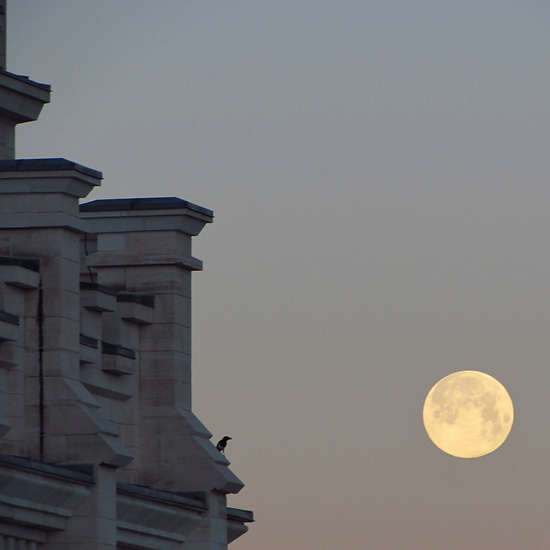
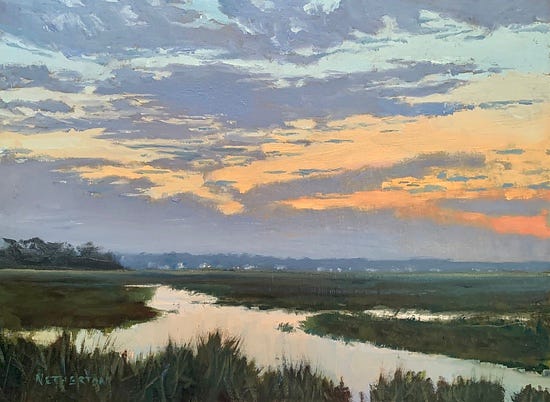
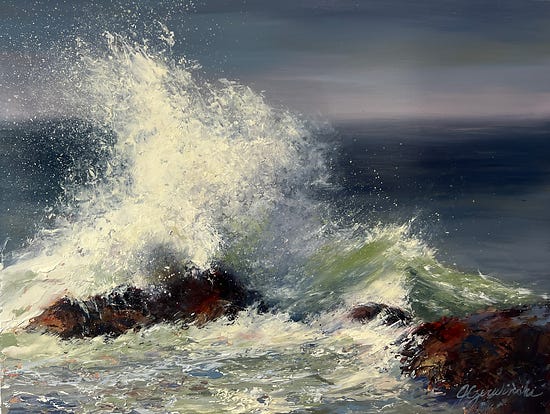
No AI Zone: Everything written in this post (and all our posts) is written 100% by flesh and blood humans
We do not use AI images with our writing. We prefer to feature and provide more exposure for human artists. If you know of a great piece of art we should consider, please leave a comment with a link to it. All featured images are properly attributed with backlinks to the artist’s website. You can help support human artists and push back against AI by liking or restacking this piece by clicking the “Like” icon ❤️, by clicking the “Restack” icon 🔁 (or by leaving a comment).
Wonderful perspective, thank you!
The Icon and the Arena ~ a dialogue:
https://claude.ai/public/artifacts/916dc411-7b8d-4ac2-badf-258489653601
Grace and peace to you Amigo, onward.