
10 Lessons from Tanner Steed on Becoming the Artist Who Keeps Going
Why the artist who succeeds is often the one who simply refuses to stop

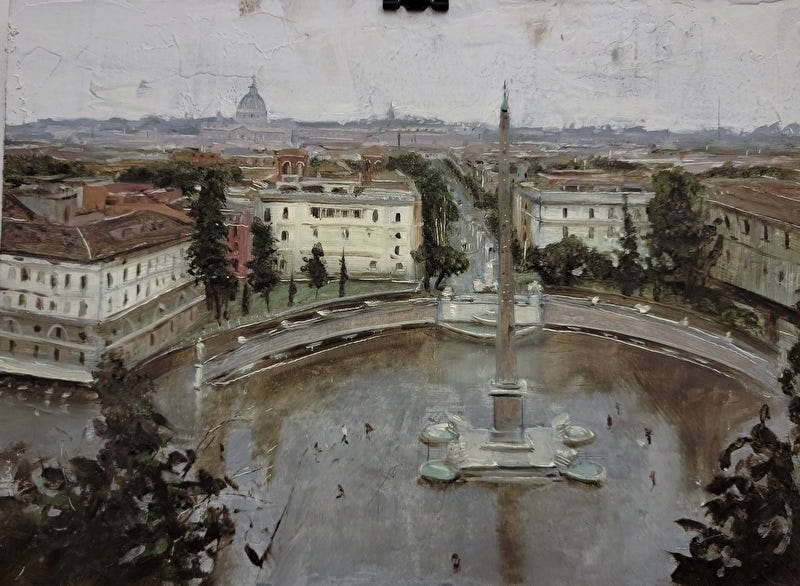
“The cave you fear to enter holds the treasure you seek.”—Joseph Campbell
Please click the Like button—the little heart icon at the top and bottom—if you want a tiny atelier of determined mice to march into your studio, sharpen your pencils, rearrange your still life, whisper “start again” in encouraging squeaks, and remind you that the last artist standing is usually the one still painting (also, it helps us better promote the arts to those who need support).
Some artists wait for the right school, the right mentor, the right gallery, or the right moment.
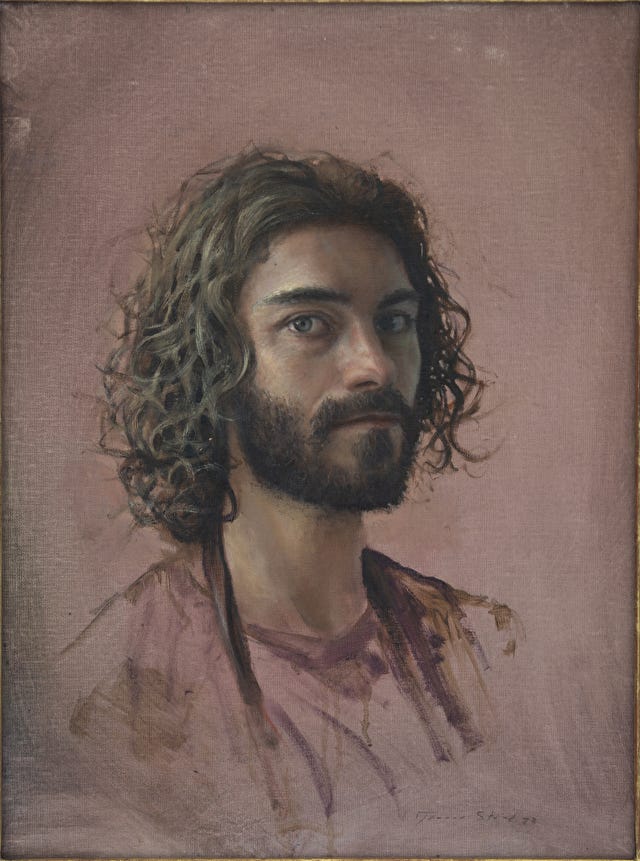
Tanner Steed started with what he had.
When formal atelier training was not available, he studied the curriculums of the schools he admired, bought the books and casts, copied masterworks, practiced from life, and built his own path one disciplined step at a time.
In our conversation with Tanner Steed on the FASO Podcast, he shared how persistence, self-directed training, community, and a commitment to mastery helped him become a full-time artist.
We felt that pulling out these lessons in a more organized, and shorter, format would be useful to our subscribers. So, our team worked with ChatGPT to get these organized this newsletter and then edited and enhanced the result. Please let us know in the comments if you like or dislike such a use of AI.
Here are ten lessons from Tanner’s story:
1. You do not need permission to begin
Tanner did not wait for perfect circumstances. He asked: What can I do from where I am?
That question is powerful. You may not have the ideal teacher, school, studio, or community yet. But you can still draw. You can still paint. You can still study. And, you can still improve.
The artist’s path begins when you start walking.
2. Treat art like a skill
Tanner studied human development and education before becoming a full-time painter.
That background taught him that art develops like other skills: through repetition, feedback, practice, and time.
Talent may give an artist a beginning. But practice gives an artist a future.
3. Build your own atelier
Tanner wanted classical training, but life circumstances made formal study difficult. So he built his own version.
He studied atelier methods, copied masterworks, practiced from casts, worked from life, and used every resource he could find.
Artists may not always get the exact training path they want. But they can still take responsibility for their education.
⚜️ Advertising note—we have a special offer that ends this month for half off your first year of a FASO website. If you’ve been waiting, now is the time. The details are below, after the essay.
4. Let fear point you toward growth
When Tanner first saw Daniel Sprick’s work, he said it terrified him.
Not because it was dark or frightening, but because it revealed a level of mastery he could not yet understand.
Instead of turning away, Tanner moved toward it.
Sometimes the work that intimidates you is showing you the next mountain you need to climb.
5. Be persistent enough to be remembered
Tanner reached out to Daniel Sprick. He did not get a response.
So, he kept working. And he reached out again.
Eventually, Sprick invited him to his studio. That meeting became a mentorship, then a friendship, and eventually a place inside a real artistic community.
The lesson is simple: respectful persistence matters and hard work opens doors.
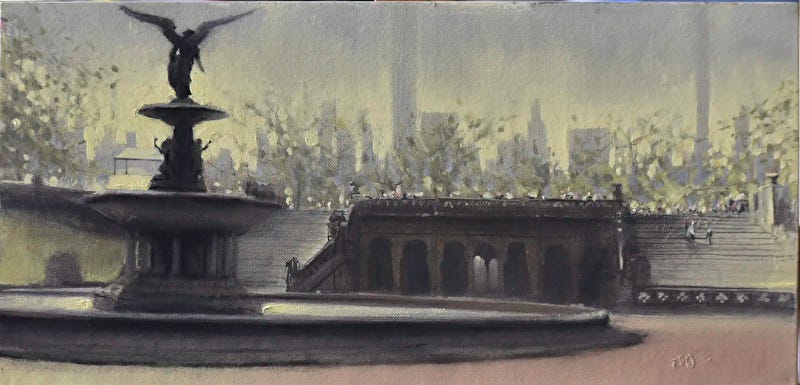
6. Paint from your life
Tanner emphasized painting from lived experience. He paints places he has traveled, things he has seen, and subjects that have actually entered his life. But he does not simply copy them. He heightens them. He tries to cast them into mystery.
An artist is not a camera. An artist reveals a relationship with the world.
This is what Clint means when he says, “A painter shows me what he painted but an artist shows me why.”
7. Start over and over again
One of Tanner’s best practical tips is to practice starts.
The beginning of a painting matters. Composition, value design, light and dark shapes, and the first arrangement often determine whether a painting has strength.
If the beginning is weak, rendering may not save it.
So Tanner starts again and again, exploring different compositions and different possibilities before becoming too attached.
A strong painting often begins as a strong design. This applies to many art forms. Writers also often tear up beginnings and start again. A great work of art often starts by finding the better story to tell.
8. Do not chase the ideal collector too early
When asked about finding an ideal collector, Tanner gave a refreshing answer: Just paint what you love.
If you love flowers, paint flowers. If you love landscapes, paint landscapes. If you love mushrooms, paint mushrooms.
There is room in the world for sincere work.
Collectors are not only buying subject matter. They are buying conviction.
9. Begin with the people who already support you
Tanner’s first collectors were family, friends, family friends, and early supporters. He hosted small shows in homes, invited people into the experience, and built relationships from there.
There is no shame in starting close to home. A collector base often begins with the people who already want to see you succeed.
Word of mouth is your greatest marketing, and a reputation is built one human interaction at a time.
10. Build more than one leg under the table
Tanner sells through galleries, direct collector relationships, his website, teaching, workshops, studio events, and educational content. That matters.
A sustainable art career is rarely built on one gallery, one platform, one show, or one lucky break.
It is built through several connected paths that support the artist over time.
The deeper lesson: become the last one standing
Near the end of the interview, Tanner said something that will shock most artists:
He believes it is actually easy to make it as an artist if you are willing to put in the work and truly believe it is possible.
The harder goal is mastery. The harder goal is becoming good enough to stand in conversation with the artists you most admire. This is the deepest goal. Mastery before marketing. Or more correctly, mastery is the best marketing.
You must cultivate, above all, the desire to make something worthy. Clint discussed this in his article The Heart of an Amateur.
Tanner’s story is a reminder that the artist who succeeds is not always the one with the most access, the best school, or the perfect opportunity. Often, it is simply the artist who keeps going.
The one who studies. The one who starts again. The one who reaches out. The one who paints what he loves. The one who refuses to wait for permission.
The one who decides to become the last one standing.
Learn more about Tanner, his art, and his philosophy:
Website: Visit Tanner’s FASO website
The FASO Podcast with Tanner: Tanner Steed - Persistence Pays Off
Newsletter: Subscribe to Tanner’s Newsletter
Social Media: Tanner’s Instagram
PS — OUR SPRING SALE ENDS MONDAY JUNE 15th.
We know setting up or switching websites is a pain. But, in this day and age, you need your own home base.
And you need it to be with a company who cares about human artists. A company with actual artists who support you and with whom you can talk. A company that actually promotes their artists, as you can see that we do in this very newsletter. Frankly, that company is us, FASO. We stand up For Artful Souls Online.
A great website, contrary to what big tech says, is more important than ever.
So to make it easier for you, we’ve put together a special spring deal where you’ll get your first year on our platform for only $150. That’s a 52% savings off the normal price of $312/year. Think of it as us paying you $162 to move your website to a place that actually promotes human creativity. Just sign up for a trial account by clicking the button below and be sure to activate your account within the first 15 days of your trial.
Please take this opportunity to move away from platforms that use your hard work as “content” to serve hostile algorithms while they callously steal your artwork to train their AI systems. We are here, ready and waiting to help you regain your sovereignty. Please join us and thousands of other sovereign artists in this movement.
Our use of AI in this article: Some of you may bristle at our use of AI for this, so we’d like to explain: Our beef with AI is primarily when it is used in a way that reduces opportunities for artists. Our goal, in the places we do utilize AI, is to use it in a way that supports human artists.
For example, at FASO, we do not train AI on your artwork for the purposes of using it to generate alternative images. We do use AI to protect your artwork from scrapers (including other AI bots) and to detect and block spam. And we are exploring the use of AI in ways that send more art lovers and collectors to our customers.
As always, The FASO Way is an open forum, so we’d love to know what your opinion of such AI use is in the comments. And, please, as we always request, all comments must be dignified and respectful of us and of your fellow artist colleagues who may have differing points of view. We are in this together, so discussion, and even debate, is important. But hateful or threatening comments will be blocked.
Very good article! Particularly, "Mastery before marketing"!
I like the condensed the version!