
8 Lessons from Ned Mueller on Building a Lasting Life in Art
Timeless advice on strengthening your craft, sustaining your career, and finding purpose through art.
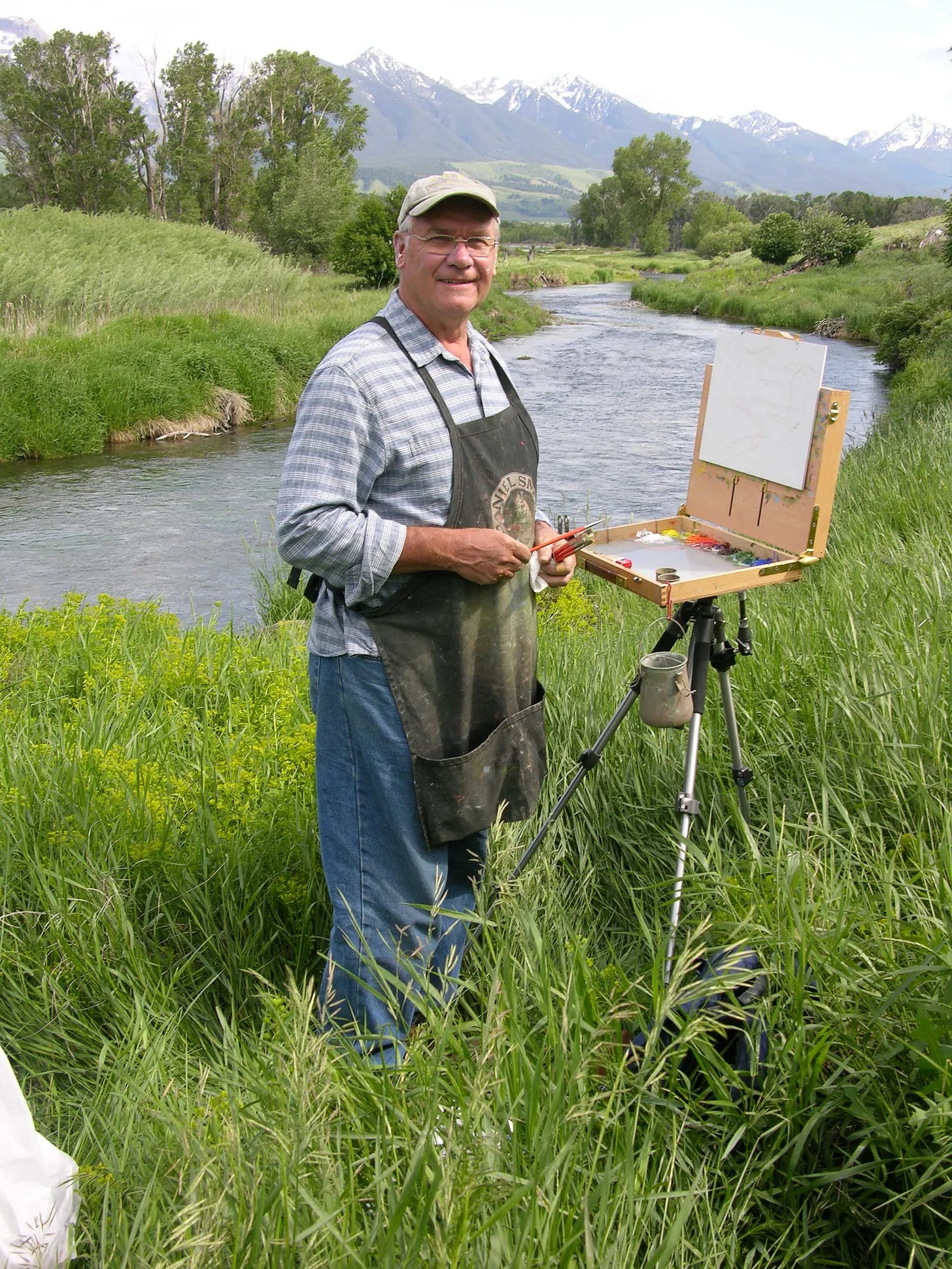
“People start out painting what they know. Then they learn to paint what they see. The third stage is the best stage: you paint what you feel.” — Ned Mueller
❤️ If a look into Ned Mueller’s wisdom on patience, practice, and passion resonated with you, please click the Like button —the little heart icon at the top and bottom. Every click helps us share these practical insights with other artists who might need a reminder to fall in love with the process. Your support directly helps us continue amplifying the voices and stories that keep the art community thriving.
In Episode #185 of The FASO Podcast, longtime illustrator, fine artist, and teacher Ned Mueller reflects on the habits, skills, and relationships that have sustained his career for decades. His advice is practical, but it also reaches beyond technique to address resilience, artistic identity, and the realities of building a meaningful creative life.
1. A lasting art career requires patience, perseverance, practice, and passion.
Mueller’s “four Ps” provide a clear framework for long-term artistic growth. Patience allows artists to accept that meaningful progress takes time, perseverance helps them continue through setbacks, practice strengthens their skills, and passion keeps them emotionally connected to the work. Together, these qualities help artists remain committed to their craft and create paintings that reflect genuine enthusiasm for their subjects.
“Find something you love and can get excited about, because if you’re not excited about your painting, it’s going to show.” — Ned Mueller
2. Artists should build strong fundamentals before trying to express everything they feel.
Mueller describes artistic development as a progression from painting what you know, to painting what you see, and finally to painting what you feel. The emotional stage may be the most compelling, but artists cannot reliably reach it without first learning how to observe, draw, organize values, and understand color.
3. Drawing trains the eye, regardless of what an artist chooses to paint.
Artists do not need to specialize in figures to benefit from drawing. Whether they study landscapes, portraits, still lifes, animals, or interiors, sustained drawing practice strengthens judgment, proportion, design, and visual sensitivity. Mueller’s larger point is that artists become better by learning to see more accurately.
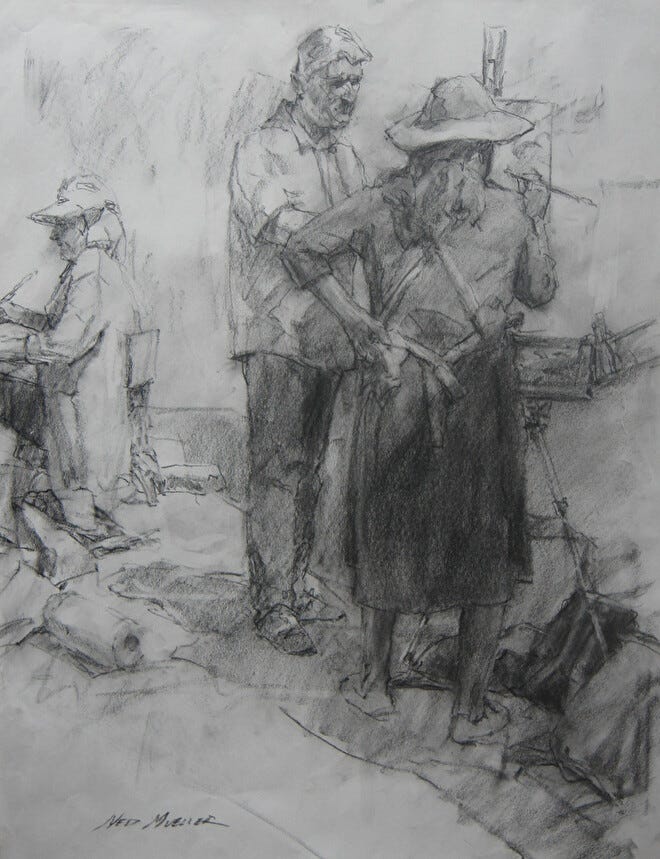
4. Simplifying a subject is often more valuable than adding detail.
Mueller encourages artists to think in large shapes, major value relationships, and clear masses before focusing on small features. Plein air painting is especially useful because changing light and limited time force artists to identify what matters most. Once artists stop trying to paint every leaf, branch, or surface detail, they begin making stronger and more intentional decisions.
“Once artists begin thinking in shapes instead of details, they really start thinking like artists.” — Ned Mueller
Artists who are developing their skills also need a professional way to share their work and grow their audience. FASO provides artist websites, marketing resources, educational content, and business tools designed specifically for working artists.
5. Small studies can produce more growth than one ambitious painting.
Mueller recommends making numerous small value, color, and plein air studies rather than investing all available time in a single large canvas. A small format encourages experimentation, speeds up decision-making, and makes failure less intimidating. Completing several studies also gives an artist more opportunities to solve problems and recognize patterns in their work.
“You will learn more by completing ten small paintings than by spending a day or two on one large painting.” — Ned Mueller
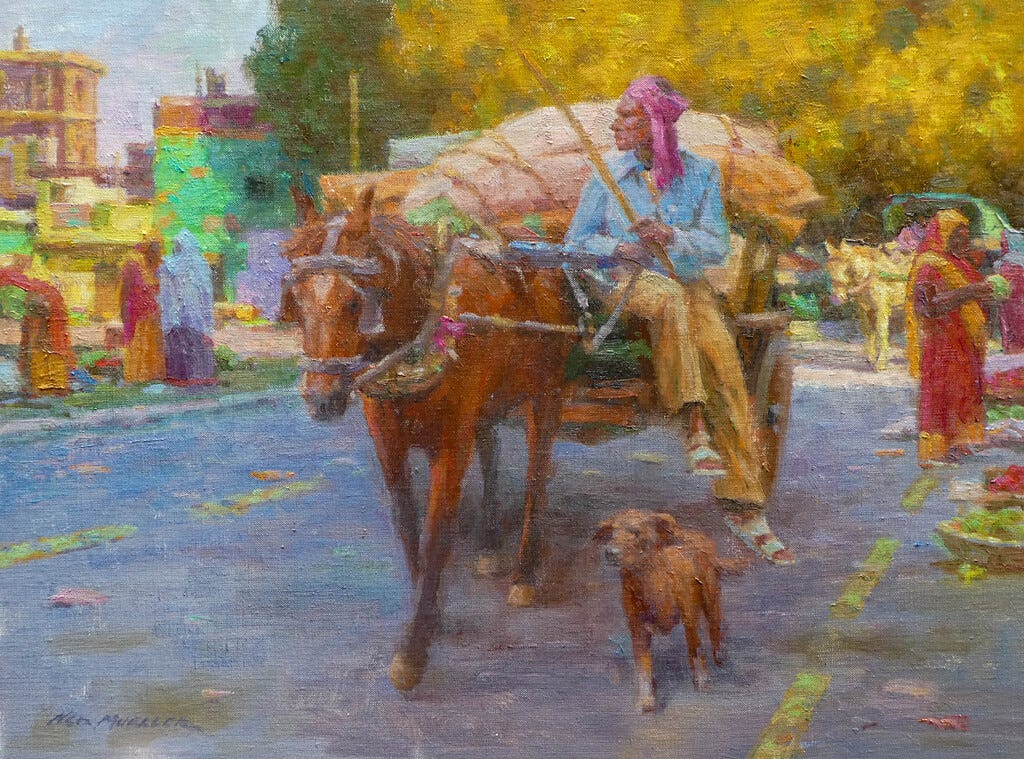
6. Artists improve more quickly when they seek instruction and constructive criticism.
A knowledgeable teacher can help an artist avoid years of unnecessary trial and error. Mueller also recommends forming small critique groups in which artists can share work, exchange thoughtful feedback, and build lasting friendships. The most productive groups remain supportive while making room for honest discussion and multiple perspectives.
7. Professional growth often requires both adaptability and reliability.
Mueller’s career moved from illustration and commercial assignments into fine art, teaching, workshops, galleries, and juried exhibitions. His experience demonstrates that artists may need to accept commissions, explore new income streams, or work in several areas while developing their personal voice. He also learned during his illustration career that clients valued artists who could meet deadlines and complete assignments dependably, even when significant money was at stake.
8. A meaningful creative practice can provide purpose during difficult seasons.
Mueller speaks candidly about chronic pain, health limitations, and the frustration of no longer having the energy he once had. Art continues to give him something meaningful to work toward, while the support of his wife, Karen, and his relationships with other artists help him remain connected. His story suggests that an art practice is not only a career or a means of self-expression; it can also become a source of structure, identity, and resilience.
Mueller’s advice is ultimately grounded in consistency rather than shortcuts. Artists must keep strengthening their skills, remain open to guidance, accept the realities of the marketplace, and continue making work they genuinely care about. A sustainable art life is built one study, one critique, and one determined return to the easel at a time.
Want to hear the full conversations and insights from Ned Mueller? Listen to this episode with Ned Mueller — Patience, Perseverance, Practice, & Passion.
PS — Note from Clint: One of the reasons I built FASO is because I believe art is important, artists are important, and the work you’re called to create deserves to be taken seriously. We are all sharing “miracles of existence” through our art.
Yes, at FASO, we build professional artist websites. Yes, we talk about marketing. Yes, we give artists tools to present their work, tell their stories, reach collectors, and sell more art.
But that is the how.
The why is that we love art, and we want to push back against a world that too often treats art like content and artists like algorithms. The modern world denigrates Beauty in preference of profit and efficiency. At FASO, we hold Beauty sacred.
So we don’t just host artist websites. We promote artists. We feature their work. We try, in our own small way, to help more art find the people who need it. And that informs everything we do and build.
If that resonates with you, we’d be honored to have you join us.
PPS — If you’re not ready to look at FASO, you can support our mission by simply clicking the heart icon at the top or bottom of this article. That helps us reach more artists and art lovers and helps us spread Beauty to a world that is desperate for it.
—Clint
Our use of AI in this article: Our team worked with AI to help generate this summary and from there we manually edited it. Our beef with AI is primarily when it is used in a way that reduces opportunities for artists. Our goal, in the places we do utilize AI, is to use it in a way that supports human artists. And we believe this use case supports rather than harms.
At FASO, we do not train AI on your artwork for the purposes of using it to generate alternative images. We do use AI to protect your artwork from scrapers (including other AI bots) and to detect and block spam. And we are exploring the use of AI in ways that send more art lovers and collectors to our customers.
As always, The FASO Way is an open forum, so we’d love to know what your opinion of such AI use is in the comments. And, please, as we always request, all comments must be dignified and respectful of us and of your fellow artist colleagues who may have differing points of view. We are in this together, so discussion, and even debate, is important. But hateful or threatening comments will be blocked.