


❤️ If this article inspired you, click the Like button—the little heart icon at the top and bottom. Think of it as sending Sarkis' 93 years of artistic wisdom out into the world, where it might quietly find an artist who's questioning their path and remind them to stay curious, trust the process, and keep painting. Every click helps us share more encouragement with the creative community.
What does a lifetime of painting teach you?
If you ask Sarkis Antikajian, the answer isn’t fame, perfect technique, or selling more artwork. It’s something much simpler: keep learning, stay curious, and enjoy the act of painting.
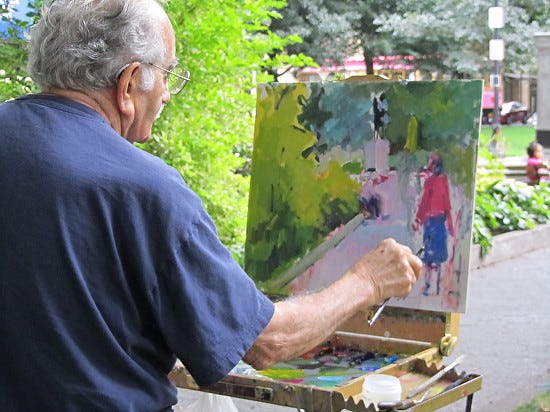
At 93 years old, Sarkis still paints nearly every day. Although he spent 35 years working as a pharmacist, his dream was always to become a full-time artist. When he retired in 1994, he finally had the chance to devote himself completely to painting—and he hasn’t stopped since.
During his conversation on the FASO Podcast, Sarkis shared decades of wisdom artists at every stage can relate to.
1. Enjoy the Process More Than the Result
It’s easy to get caught up in finishing a painting, making a sale, or wondering what other people will think. However, Sarkis believes those things matter far less than simply enjoying the work itself.
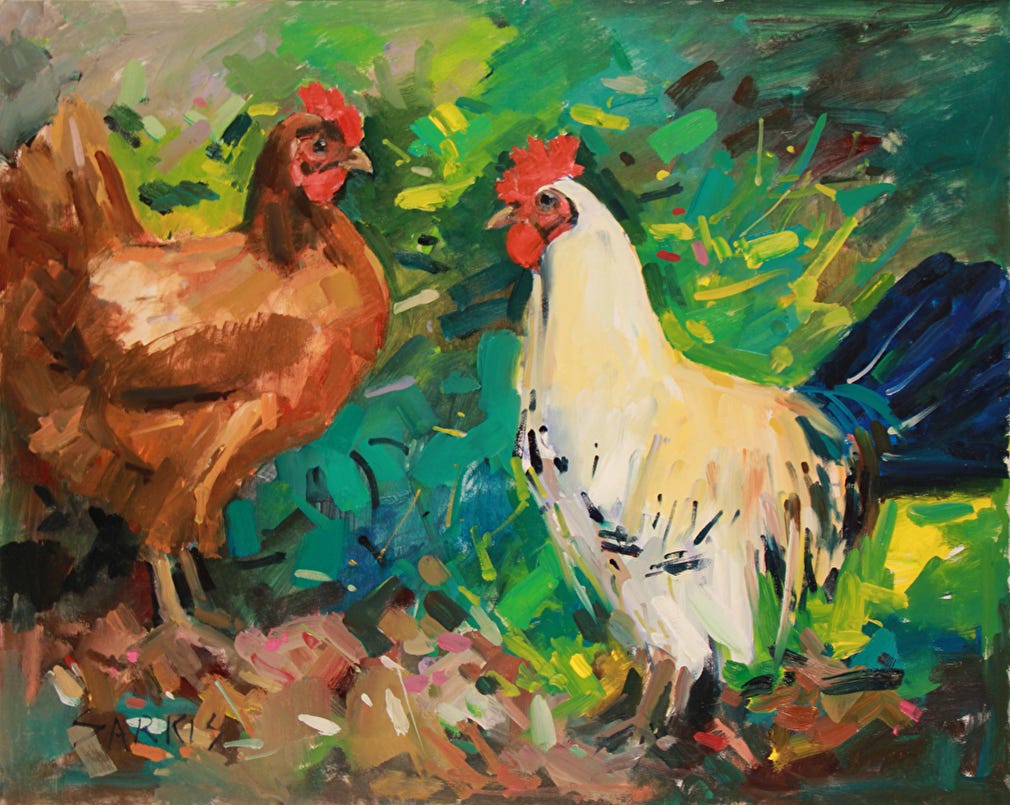
“Love the process. It’s not the outcome, it’s the process.” — Sarkis Antikajian
This mindset has kept him excited about painting for nearly eight decades. Every painting becomes another opportunity to learn instead of another test to pass.
2. Stay Curious, No Matter How Long You’ve Been Painting
You might expect someone who’s been painting for decades to feel like they’ve mastered it all, yet Sarkis feels exactly the opposite—he still considers himself a student.
“I am in an experimental mode all the time. I am in a learning mode all the time.”
Instead of repeating what already works, he looks for new ways to solve old problems. That’s what keeps his painting experience interesting.
3. Don’t Let Boredom Take Over
One of the biggest dangers for any artist isn’t failure—it’s boredom.
Painting the same subject the same way over and over eventually drains the excitement from creating.
“Boredom is a killer for the artist.”
Whether it’s switching mediums, experimenting with color, or simply looking at a familiar subject differently, Sarkis believes growth comes from trying something new.
4. Paint What Excites You
Artists often worry about what galleries want, what collectors expect, or what performs well online but Sarkis encourages artists to tune out that noise.
“Go with what you want to do and forget about what other people want you to do.”
When your work comes from genuine curiosity instead of outside pressure, it has a better chance of feeling honest—and that’s something viewers can recognize.
Build Your Art Career Without Losing Your Creative Voice
While Sarkis encourages artists to paint for themselves first, he also understands the importance of making your work easy to find.
A professional website gives collectors a place to discover your art without relying entirely on social media. That’s one reason so many artists choose FASO Websites—they’re built specifically for artists who want a beautiful online portfolio, built-in marketing tools, and an easy way to share and sell their work.
5. Financial Stability Gives You Room to Grow
One of Sarkis’ most practical pieces of advice had nothing to do with painting techniques.
He recommends having another source of income while you’re building your art career. His years as a pharmacist gave him the freedom to experiment without worrying whether every painting had to sell.
“Find some kind of income... so you’ll be able to experiment.”
Without the pressure to create only what sells, artists often discover their strongest work.
6. Paint Often—and Don’t Worry About Expensive Materials
Many artists wait until they have the perfect supplies before they really begin. Sarkis believes the opposite approach works better.
Paint often. Practice often. Learn from every painting.
“Paint a lot.”
If that means using inexpensive canvas or paper, that’s perfectly fine. The goal is to build experience, not protect expensive materials.
7. You Don’t Need to Travel Far to Find Inspiration
Some artists think they need dramatic landscapes or famous locations to create meaningful work. Sarkis spent years painting the scenery around his own home, finding something new every season.
“I see things that I’ve never seen before.”
The more closely you observe your surroundings, the more you realize there’s always something worth painting.
8. Don’t Let Your Style Become a Cage
Artists often hear they should stick to one style, one subject, or one recognizable look but Sarkis isn’t convinced that’s always good advice.
“This branding thing... you’re stuck with it.”
He believes trying different subjects and mediums helps artists continue growing. One area of painting often teaches lessons that carry into another and growth rarely happens by staying comfortable.
9. Never Stop Being a Student
Perhaps the most inspiring part of the conversation is that, even at 93, Sarkis doesn’t believe he’s finished learning.
Even today, he’s still experimenting, still sketching, and still asking questions.
“You have to stay young... I still like to learn.”
This attitude may be the real secret behind his remarkable career. It isn’t talent or success. Just an ongoing desire to keep discovering what’s possible.
Why the Journey Never Ends
Sarkis Antikajian’s story is a reminder that becoming an artist isn’t about reaching a finish line. It’s about building a lifelong relationship with creativity.
His advice is refreshingly simple: paint often, stay curious, and don't be afraid to experiment.
And most importantly, enjoy the process because if you love the act of creating, you’ll always have a reason to return to the studio tomorrow.
Want to hear the full conversations and insights from Sarkis Antikajian? Listen to this episode with Sarkis Antikajian — A Lifetime of Painting.
PS — Note from Clint: One of the reasons I built FASO is because I believe art is important, artists are important, and the work you’re called to create deserves to be taken seriously. We are all sharing “miracles of existence” through our art.
Yes, at FASO, we build professional artist websites. Yes, we talk about marketing. Yes, we give artists tools to present their work, tell their stories, reach collectors, and sell more art.
But that is the how.
The why is that we love art, and we want to push back against a world that too often treats art like content and artists like algorithms. The modern world denigrates Beauty in preference of profit and efficiency. At FASO, we hold Beauty sacred.
So we don’t just host artist websites. We promote artists. We feature their work. We try, in our own small way, to help more art find the people who need it. And that informs everything we do and build.
If that resonates with you, we’d be honored to have you join us.
PPS — If you’re not ready to look at FASO, you can support our mission by simply clicking the heart icon at the top or bottom of this article. That helps us reach more artists and art lovers and helps us spread Beauty to a world that is desperate for it.
—Clint
Our use of AI in this article: Some of you may bristle at our use of AI for this, so we’d like to explain: Our beef with AI is primarily when it is used in a way that reduces opportunities for artists. Our goal, in the places we do utilize AI, is to use it in a way that supports human artists.
For example, at FASO, we do not train AI on your artwork for the purposes of using it to generate alternative images. We do use AI to protect your artwork from scrapers (including other AI bots) and to detect and block spam. And we are exploring the use of AI in ways that send more art lovers and collectors to our customers.
As always, The FASO Way is an open forum, so we’d love to know what your opinion of such AI use is in the comments. And, please, as we always request, all comments must be dignified and respectful of us and of your fellow artist colleagues who may have differing points of view. We are in this together, so discussion, and even debate, is important. But hateful or threatening comments will be blocked.