
Beauty Under Fire: How Limits Give Birth to Transcendence
Why the Dark Nights of the Soul Give Birth to Stars

We have another post today by Eugene Terekhin, the man and the mind behind the publication Philosophy of Language.
Eugene is a regular contributing writer to The BoldBrush Letter.
This article will be locked in two days for paying members only.
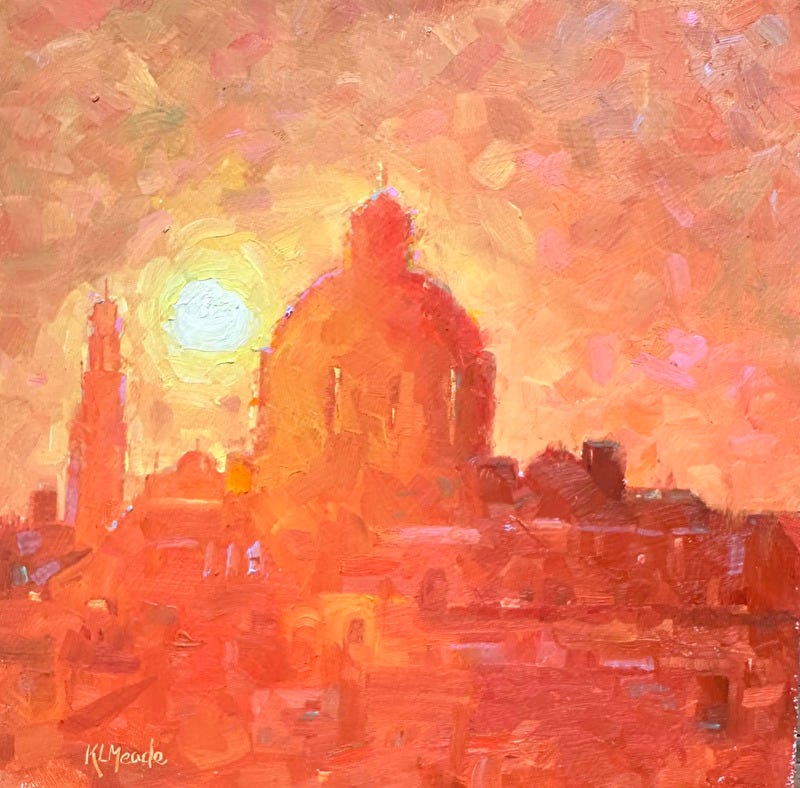
FASO Loves Katherine LaPlace Meade’s paintings
Wouldn’t You Love to work with a website hosting company that actually promotes their artists?
As you can see, at FASO, we actually do, and,
we are the only website host we know of that does.
Click the button below to start working
with an art website host that actually cares about art.
PS - If you prefer Squarespace websites, you should check out our Artful Square offering. We can generally save artists money, unlock extra features, and we promote our Squarespace artists too!
Feature Article:
Beauty Under Fire: How Limits Give Birth to Transcendence
Alexander Filonenko, a Ukrainian philosopher, observes:
“How surprising that in the midst of war, people often feel more alive than in times of peace.”
When a person is confronted with an existential threat, a choice appears: to give up – or to rise above oneself. In every human being there is something that exceeds mere humanity. Often, we do not know it is there until it is suddenly revealed by some danger.
J.R.R. Tolkien describes this in The Lord of the Rings through Frodo:
“There is a seed of courage hidden (often deeply, it is true) in the heart of the fattest and most timid hobbit, waiting for some final and desperate danger to make it grow…”
Desperate times reveal that human beings are more than merely human. We are always more than we know. No one is what they seem to be. Crisis makes this unmistakably clear: unless I rise above myself, I am not yet myself.
My humanity is revealed only when I transcend my humanity. If I remain merely human, I become less than human. To be fully human, I must become divine. When I rise beyond my humanity, I finally become who I am. Unless I walk on water, I cannot walk on the earth.
The art of life unfolds within life’s limitations. Limitations are the frame in which our divinity is disclosed. Whatever we do – paint, write, teach, fix cars, or design websites – we exist within a given frame. We do not choose our frame; we choose only what to do with it.
As G.K. Chesterton wrote:
“Art consists of limitation. The most beautiful part of every picture is the frame.”
Why?
Because when we see the frame not as a cage but as a place to reveal transcendence, the frame itself is transformed – from constraint to beauty, from shackles to revelation.
Beauty is disclosed within limits.
The best of art is always created in the worst of times. Dostoyevsky produced his major masterpieces – Crime and Punishment and The Brothers Karamazov – after prison, a mock execution, epilepsy, debt, and a lifetime of suffering.
Dante wrote The Divine Comedy amid political upheaval in Florence and profound personal exile.
Viktor Frankl’s Man’s Search for Meaning was written after surviving Auschwitz; his logotherapy was distilled from existential crisis.
Beethoven’s late string quartets were composed while he was deaf, isolated, and gravely ill.
As Nietzsche put it:
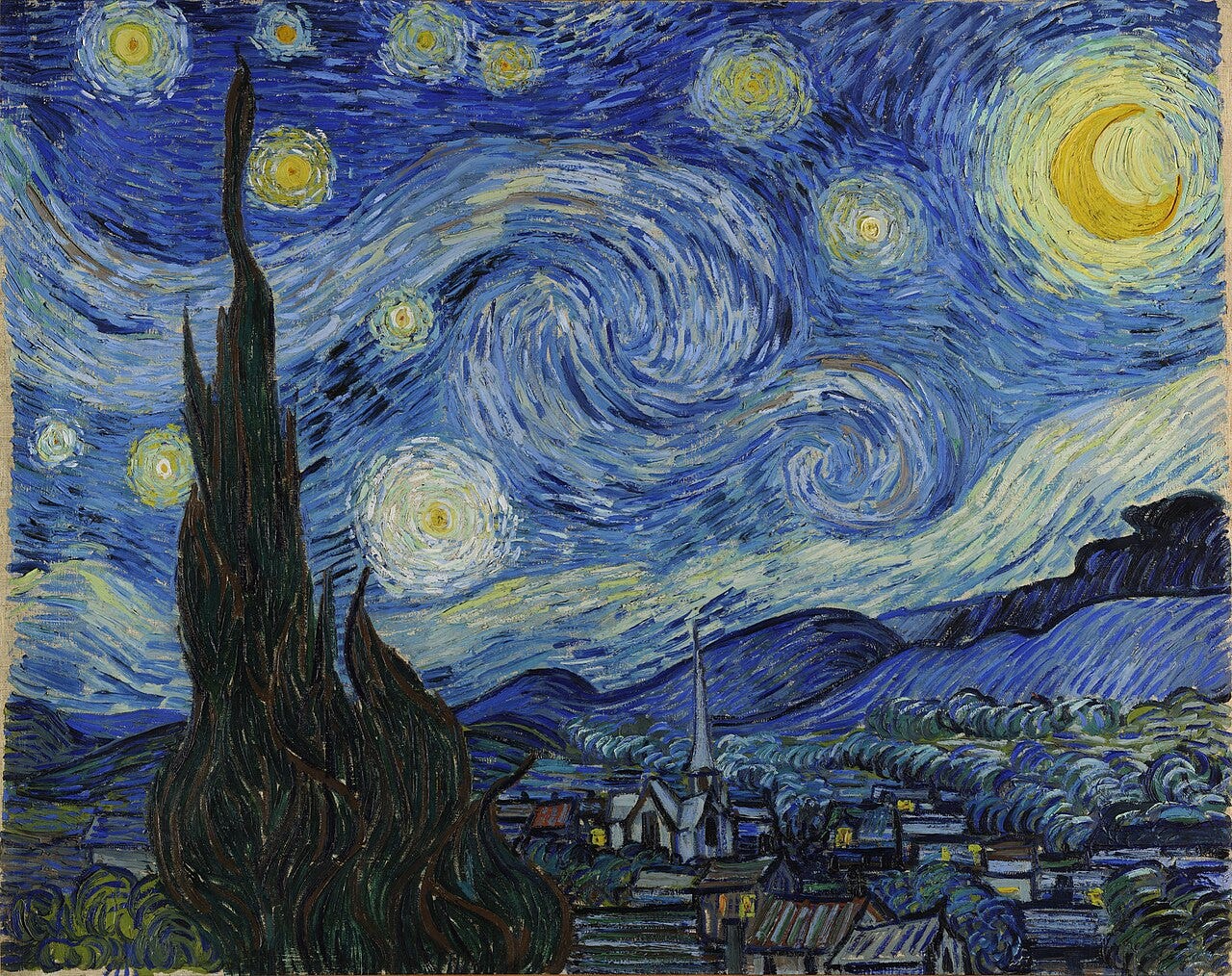
“One must still have chaos in oneself to give birth to a dancing star.”
Beauty is born within a certain frame. And the more faithfully we create beauty within that frame, the more beautiful the frame itself becomes.
Apostle Paul calls our mortal bodies “a frame.” Human life, then, is about rising beyond one’s limits and transforming limitations into Art.
The darker the night, the brighter the stars.
When chaos descends, we begin to yearn for the dancing star. The soul needs it. This yearning awakens the desire to shape beauty out of chaos.
Tolkien began writing his legendarium in the trenches of the First World War.
Amid political turmoil and personal struggle, Francis of Assisi picked up stones and began restoring San Damiano.
Andrei Rublev took up his brushes and painted The Trinity while Russia endured one of the darkest periods of its history, under the Mongol-Tatar yoke.
The soul longs for the dancing star. It is the only thing that can keep it alive when the world is falling apart.
As G.K. Chesterton famously put it:
“Hope means hoping when things are hopeless, or it is no virtue at all.”
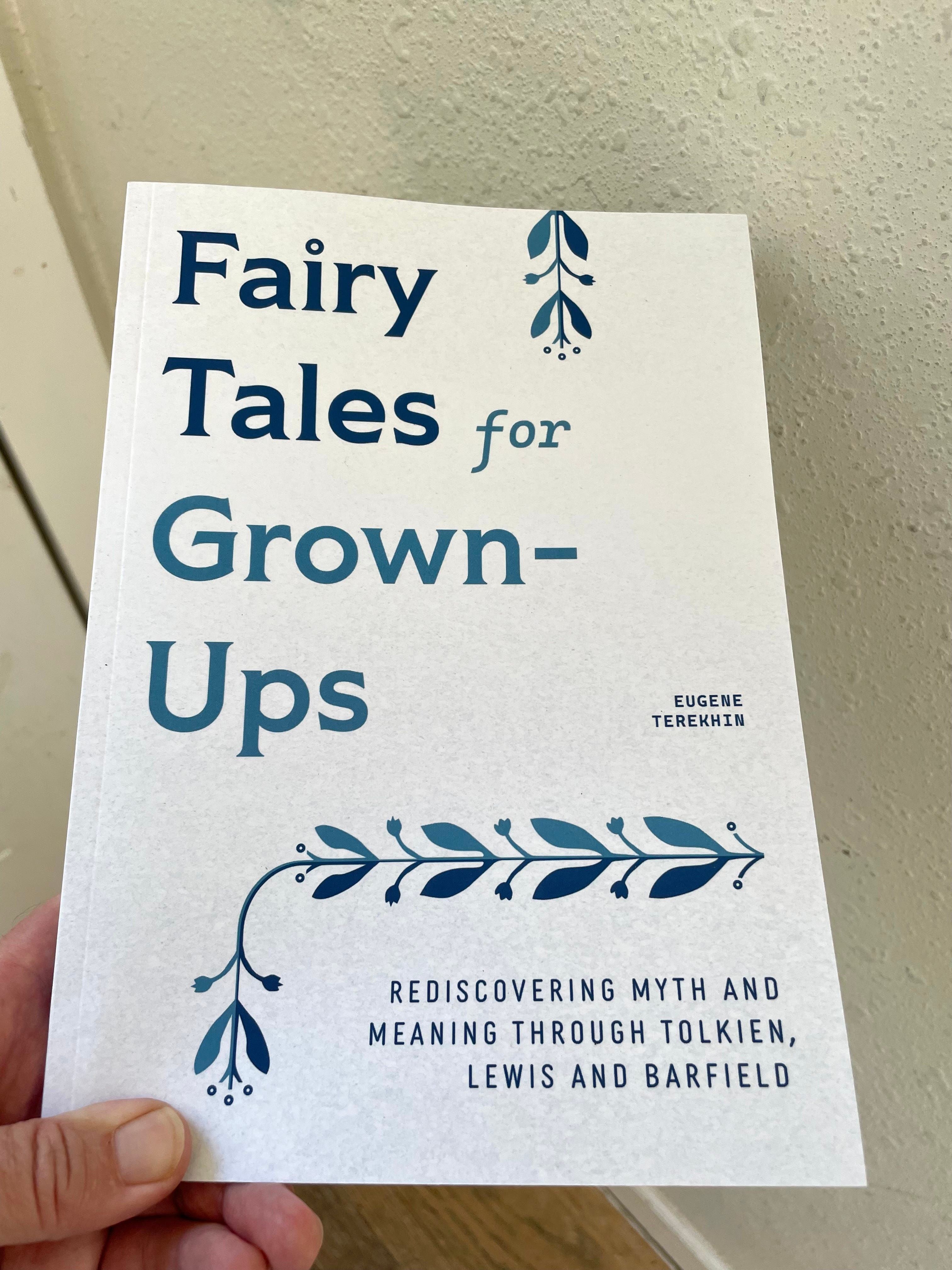
PS — Check out Eugene’s new book Fairy Tales for Grown-Ups: Rediscovering Myth and Meaning through Tolkien, Lewis, and Barfield.
Available on Amazon or his website.
PPS - Don’t forget to sign up for Eugene’s newsletter, Philosophy of Language here.
We do not use AI images with our writing. We prefer to feature and provide more exposure for human artists. If you know of a great piece of art we should consider, please leave a comment with a link to it. All featured images are properly attributed with backlinks to the artist’s website. You can help support human artists and push back against AI by liking or restacking this piece by clicking the “Like” icon ❤️, by clicking the “Restack” icon 🔁 (or by leaving a comment).
So awesome!
One of the more salient articles on humanity that has a lot of weight today.