

The FASO Way newsletter — exploring how to thrive as an artist in the age of AI
Today’s Newsletter is Brought to You by FASO.
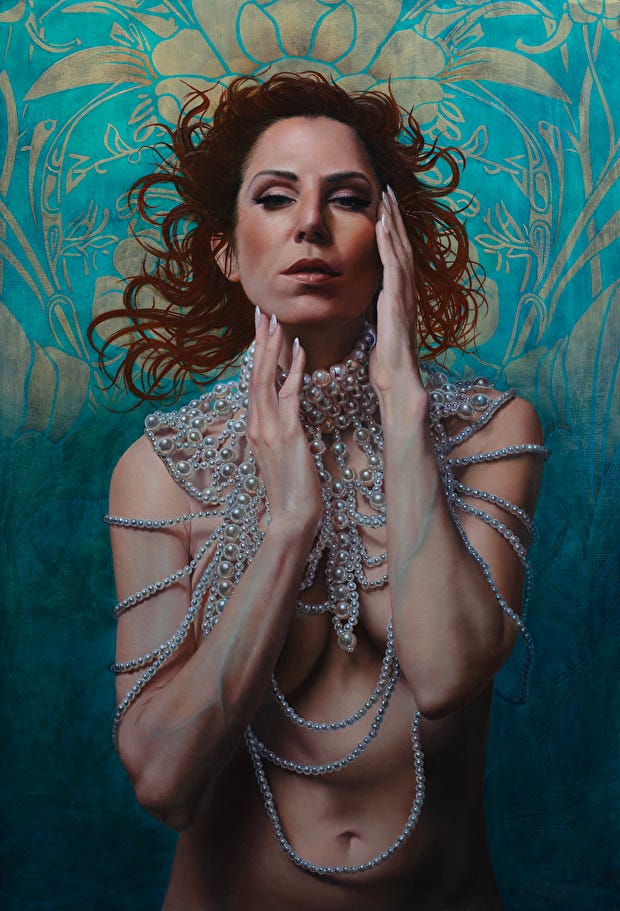
FASO Loves Shana Levenson’s paintings
SPRING SALE - SAVE 52% ON FASO FOR A LIMITED TIME
Wouldn’t You Love to work with a website hosting company that actually promotes their artists?
As you can see, at FASO, we actually do, and,
we are the only website host we know of that does.
Click the button below to start working
with an art website host that actually cares about art.
Just activate your account before before your trial expires to save 52% on your first year.
Today’s Article
Art Marketing Lessons from Shana Levenson
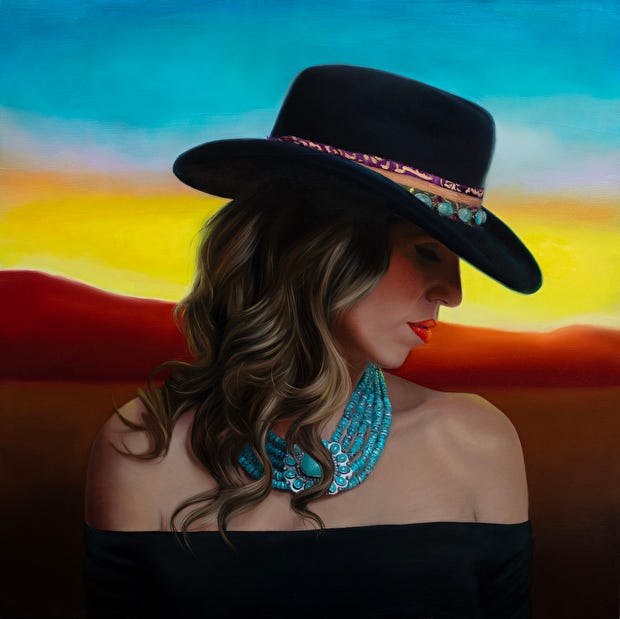
“Art is not what you see, but what you make others see.” — Edgar Degas
There’s a lot of noise around the “right” way to do art marketing. People talk endlessly about funnels, algorithms, content strategies, and tactics. But, most of that isn’t what’s actually driving sales for working artists.
Listening to Shana Levenson talk about her career on our most recent episode of The FASO Show, a much simpler picture emerges: Art marketing isn’t about tricks, it’s about a handful of habits that, when done consistently, create real momentum. This is what all Sovereign Artists must eventually embrace.
This episode was so good, as an experiment, our team asked ChatGPT to pull out the most important points. We felt that pulling out these nine lessons in a more organized, and shorter, format would be useful to our subscribers. Our team worked with ChatGPT to get these points organized in the clearest format that we could. And then we went through and edited them for presentation and clarity.
Some of you may bristle at our use of AI for this, so we’d like to explain: Our beef with AI is primarily when it is used in a way that reduces opportunities for artists. Our goal, in the places we do utilize AI, is to use it in a way that supports human artists.
For example, at FASO, we do not train AI on your artwork for the purposes of using it to generate alternative images. We do use AI to protect your artwork from scrapers (including other AI bots). And we will use AI in ways that send more art lovers and collectors to our customers.
As always, The FASO Way is an open forum, so we’d love to know what your opinion of such AI use is in the comments. And, please, as we always request, all comments must be dignified and respectful of us and of your fellow artist colleagues who may have differing points of view. We are in this together, so discussion, and even debate, is important. But hateful or threatening comments will be blocked.
Here are the nine lessons that Shana made that stood out:
1. Galleries Are Not the Center Anymore
Shana was direct about this: being in a gallery is not the end goal.
Galleries still matter. They give people a place to see your work in person. And that is important. But they’re no longer the primary driver of sales for many artists.
In Shana’s case, most collectors were finding her through social media. At one point, she realized she was bringing the majority of buyers to the gallery herself—while still giving up 50% of the sale.
That led her to a simple conclusion: if the gallery isn’t actively helping sell your work, the relationship may not make sense.
The takeaway isn’t to avoid galleries. It’s to understand what role they actually play—and not rely on them to build your career for you.
2. Social Media Is a Direct Line to Collectors
For Shana, social media wasn’t optional. It was how she built her collector base.
The key point here is not “go viral” or “play the algorithm.” It’s much simpler:
If people don’t see your work regularly, they don’t remember you.
That’s the entire game. Which leads to the next point…
3. Consistency Beats Everything
One of her mentees was posting once a month and seeing no results.
So, her mentee moved to posting once a week instead, and things started to happen.
That’s the whole change: You don’t need elaborate videos. You don’t need to be on camera if you don’t want to. You don’t need to spend hours creating content.
You do need to show your work consistently: A good photo; a detail shot; a crop; a moment that shares some of your process.
Simple things like that, posted regularly.
Advertising Note — Wouldn’t You Love to work with a website & storefront hosting company that actually promotes their artists? As you can see, in this very newsletter, at FASO, we actually do, and, we are the only website host we know of that does. In today’s world, you need your own website & storefront more than ever. And that’s exactly what FASO provides. We’re running a spring special of 52% off your first year. Just activate your account before before your 30-day trial expires. Start with FASO for free.
4. Presentation Matters More Than You Think
She emphasized this clearly: the quality of your images matters.
If your photo is poor, that’s the first impression—and often, it’s the only one.
Please take the time to:
Photograph your work well
Adjust lighting and color correctly
Show close-ups and details
You’re not just documenting your work—you’re presenting it.
Editor’s’ note: if we had the ability to “upvote” this item, we would. This is one of the biggest mistakes we see on FASO Artist Websites.
5. Pay Attention to What People Respond To
One of Shana’s most useful insights came from a simple experiment: She posted a cropped section of a painting—and it got a stronger response than the full image.
That led her to explore that idea further, and she eventually turned that idea into an entire series that sold well.
The lesson is not to chase reactions blindly, but to notice them.
Your audience is constantly telling you, through their feedback and reactions, what’s resonating with that. And that information can guide you to what to explore next.
6. Most Sales Happen After the First Message
This is where many artists drop the ball: Someone expresses interest, and the artist either hesitates or doesn’t follow up.
Shana does the opposite.
She:
Responds quickly
States the price clearly
Mentions payment plans upfront
Follows up later with new work
Her experience is that a large percentage of sales come from continued contact—not the first interaction.
Clint’s note: I used to sell art for my own gallery. I once followed up with a prospect every couple of months FOR THREE YEARS before making the first sale to him. Most artists give up FAR too soon. And, on the flip side, as a buyer, I am SHOCKED at how often that I find a work I WANT TO BUY on an artist’s website, email the artist some questions and then…….nothing. Or, I finally get a response two months later. I’m going to say this straight out, from a place of stern love: when you do that to a collector, it is INFURIATING. And it WILL cause you to lose the sale and most likely to lose future sales. If following up is a challenge for you, please let me know in the comments. We, at FASO, are developing a service that will be of assistance in that department and it will close sales you are losing if you aren’t following up properly. Let us know if that’s of interest in the comments.
7. Make It Easy for People to Buy
One small change made a big difference for Shana: offering payment plans.
It allows people who love your work—but can’t pay all at once—to still become collectors.
Combine payment plans with clear communication (price, availability, next steps), and you remove a lot of the friction that prevents sales from happening.
8. Don’t Rely on One Income Stream
Shana was also clear that relying only on original paintings can be unstable.
She supplements her income through:
Prints
Teaching
Workshops
Mentorship
Each of these creates another way for people to engage with her work.
9. Stop Avoiding the Hard Parts
Her final point applies across everything: If you’re not good at something—posting, selling, talking about your work—you don’t avoid it, you do more of it.
That’s how you improve.
Closing
There’s nothing overly complicated here.
Show your work consistently. Present it well. Pay attention to what resonates. Follow up with people. Make it easy to buy.
None of it is flashy, but it all works. And it all makes a difference.
PS — We know setting up or switching websites is a pain. But, in this day and age, you need your own home base.
And you need it to be with a company who cares about human artists. A company with actual artists who support you and with whom you can talk. A company that actually promotes their artists, as you can see that we do in this very newsletter. Frankly, that company is us, FASO. We stand up For Artful Souls Online.
A great website, contrary to what big tech says, is more important than ever.
So to make it easier for you, we’ve put together a special spring deal where you’ll get your first year on our platform for only $150. That’s a 52% savings off the normal price of $312/year. Think of it as us paying you $162 to move your website to a place that actually promotes human creativity. Just sign up for a trial account by clicking the button below and be sure to activate your account within the first 15 days of your trial.
Please take this opportunity to move away from platforms that use your hard work as “content” to serve hostile algorithms while they callously steal your artwork to train their AI systems. We are here, ready and waiting to help you regain your sovereignty. Please join us and thousands of other sovereign artists in this movement.
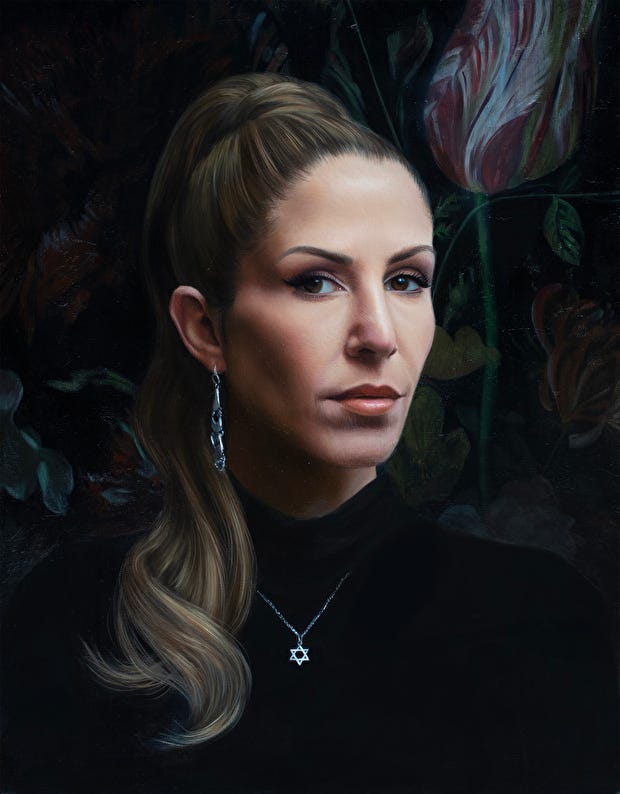
We do not use AI images with our writing. We prefer to feature and provide more exposure for human artists. If you know of a great piece of art we should consider, please leave a comment with a link to it. All featured images are properly attributed with backlinks to the artist’s website. You can help support human artists and push back against AI by liking or restacking this piece by clicking the “Like” icon ❤️, by clicking the “Restack” icon 🔁 (or by leaving a comment).
Hi, I read your email about Shana with great interest. Most notably about being clear with stating price, also about offering a payment plan. So I logged on to Shana’s website and noticed two things: 1. Her prices are not included, just the usual “contact the artist about this work. (This never works for me, if I can’t see a price I move on.) and 2. Her payment plan is a small note on her contact page. (Maybe that works for some but again, no price and no details). I did not listen to the original podcast so maybe I’m missing something?
I respond to every inquiry, only to find that 99% of them are looking for an NFT. The prices are stated clearly on my website, so when someone writes to ask me if the work if for sale and how much it is, my first assumption is that they are not legitimate buyers. Do you have any thoughts on this?