
The Quiet Art Marketing That Works
Why Trust Outperforms Visibility in the Art World

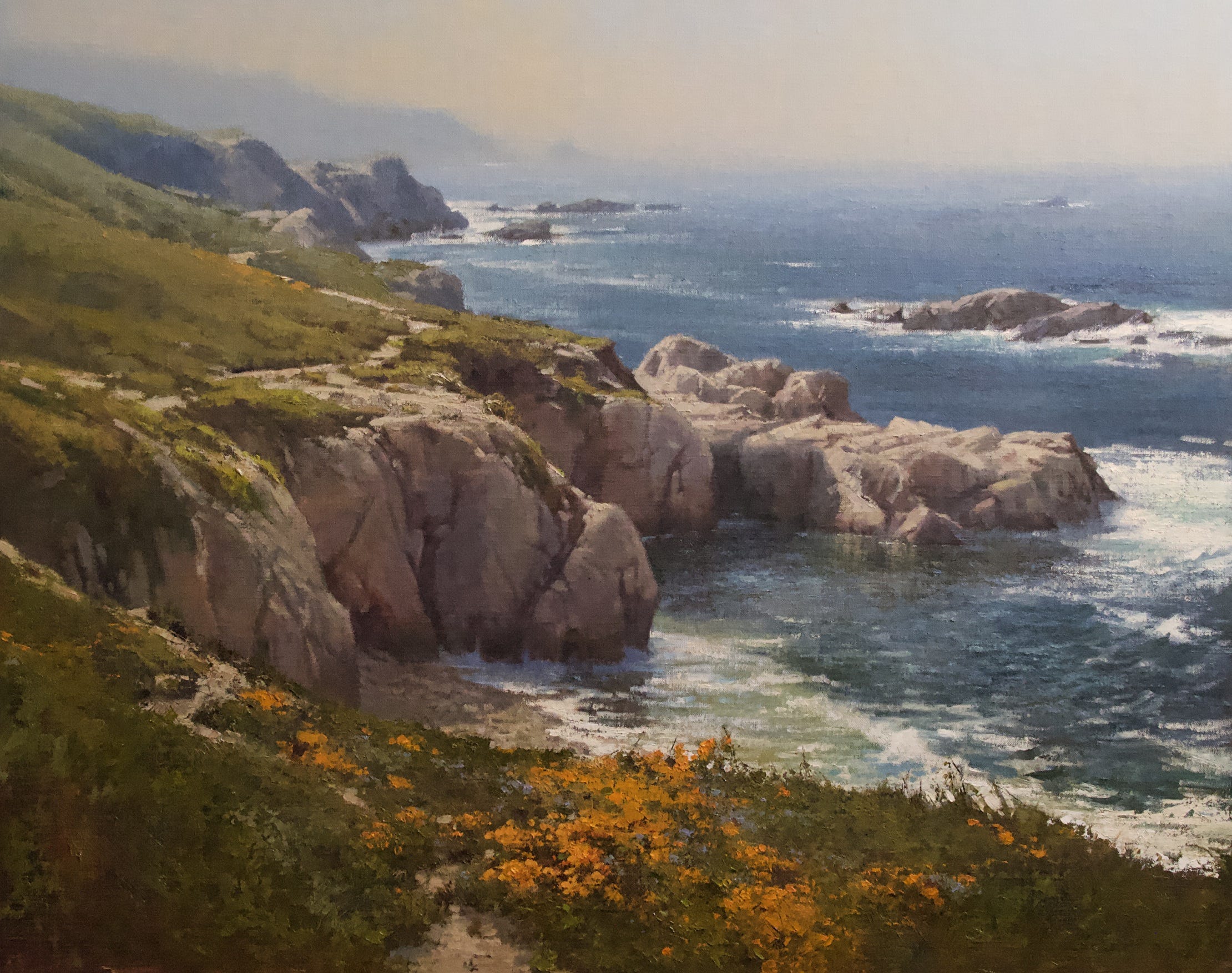
“If I am worth anything later, I am worth something now.
For wheat is wheat, even if people think it is grass in the beginning.”
— Van Gogh
The Sovereign Artist does not persuade the world of her worth; she simply knows that it is true.
Most artists think marketing means being seen: More posts; more platforms; louder announcements; better timing. And perhaps, just perhaps, a little luck with the algorithm.
But galleries, collectors, and curators aren’t scrolling your feed asking, “Is this artist visible enough?”
They’re asking something far more fundamental: Can I trust this person?
In reviewing the a recent BoldBrush Show interview with landscape painter Cindy Baron, I wasn’t struck by clever tactics or growth hacks. What emerged instead was a pattern — a way of moving through the art world that quietly explains how representation and long careers actually happen.
Cindy never called it marketing. And that’s precisely why it works.
Here are the key lessons I took away from our talk with Cindy:
1. Your Social Feed Is a Reference Check
One of Cindy’s primary insights was this: galleries are watching how artists behave online.
Not because they care about your opinions — but because they’re assessing risk.
Galleries are asking the following questions:
Will this artist deliver?
Will they represent the gallery well?
Will this relationship function well… or will it quietly combust?
Cindy’s approach is simple:
Keep your feed primarily about the work.
Allow a light personal layer — family, life, humanity.
Avoid turning your platform into a battleground.
This isn’t about hiding who you are. It’s about claiming Sovereignty.
Your public presence should reflect self-command, not reactivity.
Professional tone signals professional behavior — and inner authority.
2. Fresh Work Is Marketing
Cindy was blunt about something many artists resist hearing: don’t circulate the same painting through multiple shows and competitions.
From the gallery’s perspective, that signals stagnation. From the collector’s side, it quietly erodes confidence.
Fresh work isn’t just creative growth — it’s proof of vitality.
Consistency says I am here, I am working, and I am not dependent on a single success.
That confident self-sufficiency is a form of power.
3. Don’t Pitch Galleries. Meet Them.
One of Cindy’s gallery relationships began with a move that feels almost subversive in today’s hustle culture.
She walked into the gallery. She didn’t bring work. She didn’t ask for representation. She simply introduced herself.
No pitch. No performance. No neediness.
A year later, the gallery contacted her.
This is sovereignty in action: relationship before transaction; trust before leverage.
Galleries don’t want to be convinced. They want to feel at ease.
4. Let Third-Party Validation Speak First
Another gallery discovered Cindy’s work through a juried show and a magazine feature.
Competitions, exhibitions, and publications act as credibility shortcuts — not because they confer worth, but because they reduce uncertainty.
They whisper: this artist has already been tested.
The Sovereign Artist doesn’t beg for authority.
The Sovereign Artist allows it to accumulate naturally. She acts as gravity that draws authority toward them with the power of her art.
You can get started now by entering our BoldBrush Painting Competition. Every artist gets one free entry per month (and FASO members get bonus free entries each month).
5. Be Easy to Follow, Easy to Buy, Easy to Book
Throughout the conversation, Cindy kept returning to one phrase:
“It’s on my website.”
That’s not accidental.
A clear, updated website removes friction. It answers questions before they’re asked. It signals preparedness rather than pursuit.
Marketing, at its best, isn’t seduction. It’s clarity.
You may think your website doesn’t matter, or even that you no longer need one. The Sovereign Artist knows better. Every sovereign needs a kingdom and, online, that’s your website. Otherwise, you’re just a peasant on some other lord’s land. And, as we’ve discovered the hard way, our tech overlords don’t care much about scorching the land upon which we farm if it suits them.
FASO Artist Websites are designed to be easy and professional for artists and their collectors. You’ll get an art website with all the features needed to properly browse and purchase art for less money than you’ll spend on the bigger, more complicated, and more generic options. We are not “big tech.” We are creatives and our only mission is being a place that encourages human creativity to thrive. Learn more.
6. Professionalism Creates Referrals
Cindy described how she treats collectors: thoughtful communication, clear updates, and respect for privacy.
That’s not merely politeness. That’s stewardship. That’s not overhyped “brand building.” It’s building true reputational power. Reputational Power is one of the elements we teach in our “circles of art marketing” framework. It’s a true power that translates into pricing power.
Collectors don’t just recommend beautiful art. They recommend artists who make them feel something — artists who govern themselves.
7. Choose Channels You Can Sustain
Cindy doesn’t chase every new platform. She stays consistent with what she can maintain.
This isn’t resistance to change. It’s discernment.
The Sovereign Artist chooses depth over diffusion and steadiness over novelty.
8. Quality Protects Your Name
Cindy refuses to rush ten paintings when four strong ones will do.
Because once a work leaves your studio, it becomes part of your name; part of your reputation.
Future-you must live with it and so must the collector.
Quality is not perfectionism: It’s responsibility.
The Deeper Lesson
In the discussion, Cindy never framed any of this as marketing. But taken together, it forms a cohesive framwork:
Signal reliability.
Create continuously.
Build relationships without grasping.
Let credibility accrue.
Remove friction.
Protect your name.
It’s quiet. It’s slow. And it works.
Because in the art world — as in life — authority follows those who have already found it internally.
A Personal Note
After decades of working with artists, I keep seeing the same thing: the ones who last aren’t louder, faster, or more visible.
They are more internally governed.
They don’t chase opportunity — they become trustworthy enough that opportunity chases them.
Chasing the latest marketing tactics didn’t build their careers: Sovereignty did.
PS - My forthcoming book The Sovereign Artist: The Liberating Power of the Creative Act is coming along nicely. If you’d like to join the waitlist, please click here.

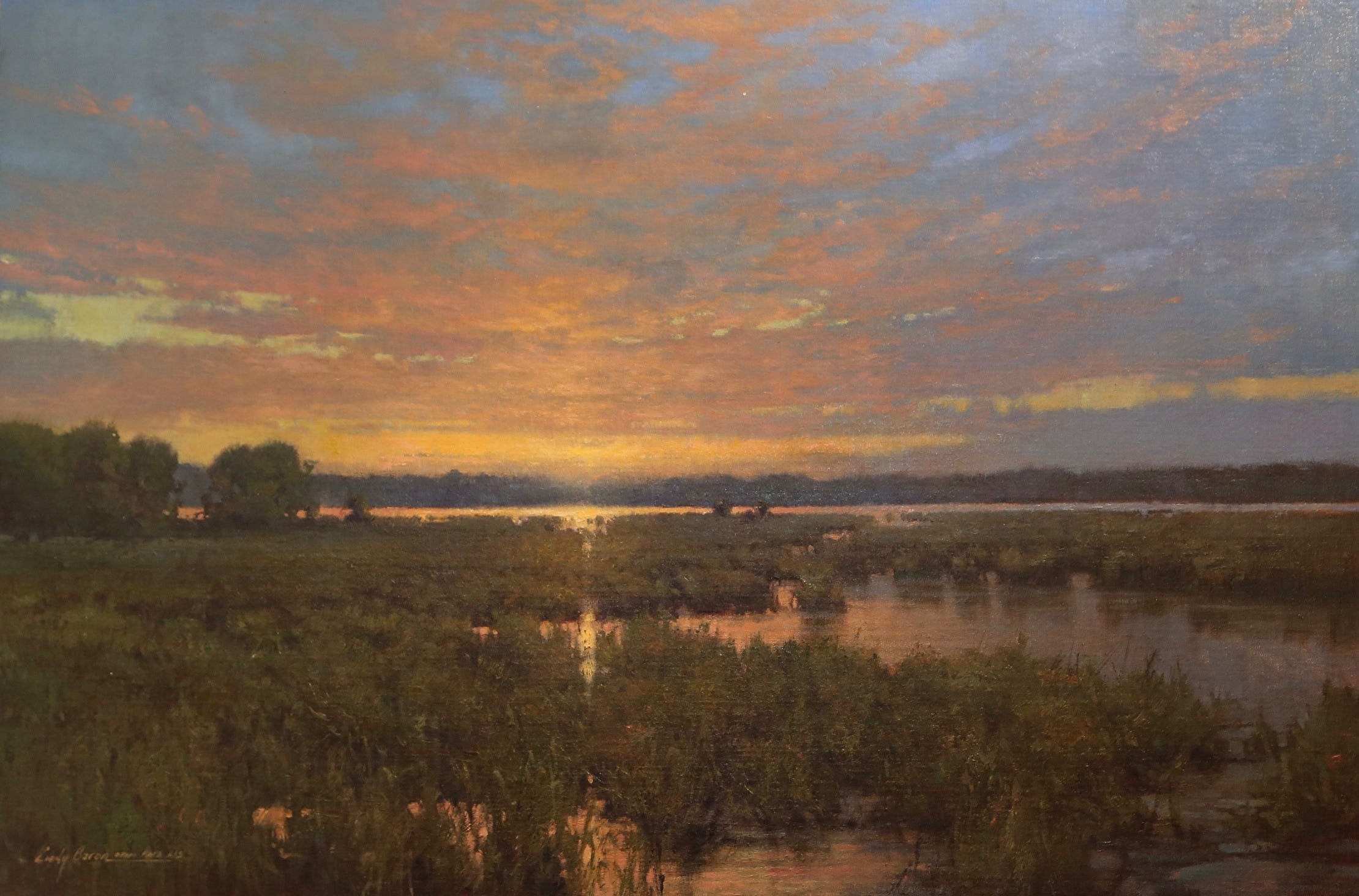
FASO Loves Cindy Baron’s paintings
Wouldn’t You Love to work with a website hosting company that actually promotes their artists?
As you can see, at FASO, we actually do, and,
we are the only website host we know of that does.
Click the button below to start working
with an art website host that actually cares about art.
PS - If you prefer Squarespace websites, you should check out our Artful Square offering. We can generally save artists money, unlock extra features, and we promote our Squarespace artists too!
Thank you! Great summary of Cindy’s interview. A couple years ago I was at a gallery in Montana, where I had the pleasure of seeing Cindy’s paintings in person. The person who worked at the gallery told me when she unwrapped Cindy’s new work that had just come, the paintings brought her to tears by the beauty in them. ❤️ (What every artist wants :) , and yes, I passed that on to Cindy.)
Well said honesty and professionalism is extremely important for the relationship. Galleries also need the professionalism. I have been in Galleries and have had good experiences and bad experiences in others. Currently I have been out of Galleries selling online and in a yearly show. I consider myself semi retired meaning I'm still painting and striving to constantly improve my skills but painting for myself more then for what the Galleries want here in Alaska. I do have a group of collectors that follow me. I am in my mid 70s now and enjoying my senior years.