
Your Art Is Not Selling Yet, but You Can Change That.
Lori Woodward explains why strong work, smart pricing, and genuine relationships matter more than chasing exposure.


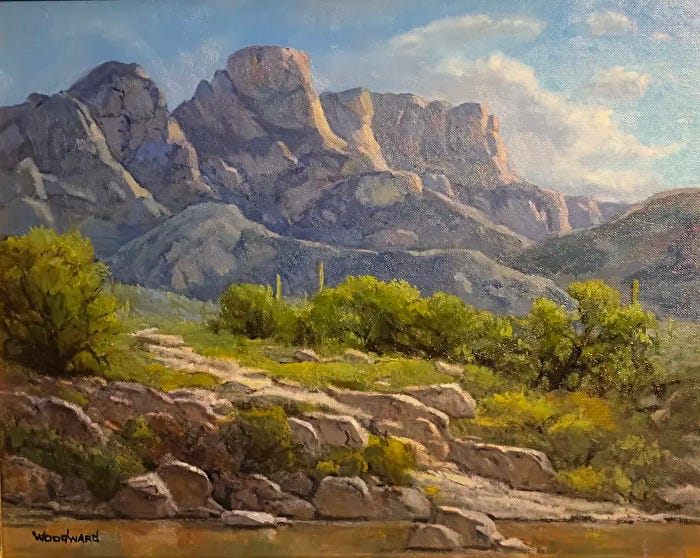
“You have to be consistent, you have to be prolific, and you have to have a continuous, cohesive, recognizable body of work.” — Lori Woodward
❤️ Please click the Like button— the little heart icon at the top and bottom—if you would like a paint-splattered guide to carry this article across the internet, set a fresh canvas before another artist, and whisper, “Keep painting, build the body of work, and give the right buyers a chance to find it.” Your click also helps us reach more artists with practical guidance for building sustainable, authentic creative careers.
Artists often assume that disappointing sales indicate a marketing problem. According to artist and veteran art marketing writer Lori Woodward, the real explanation is usually more complicated. Sustainable sales depend on the quality and consistency of the work, the market in which it is offered, the artist’s production capacity, and the relationships built around it.
Woodward’s advice is encouraging precisely because it is realistic. Artists do not need to become international stars, master every social platform, or pursue the same career model. They do, however, need to understand what buyers want and prepare themselves to meet that demand.
1. The art market is changing, but it is not disappearing.
Economic uncertainty can make artists fear that people have stopped buying art. Woodward distinguishes the current market from the collapse that followed the 2008 financial crisis, when collectors flooded the secondary market with recently purchased art and drove down prices for many living artists.
Today’s market is more varied. Woodward sees younger collectors entering the Western art market, crowded gallery openings returning, and buyers showing renewed interest in experiencing art in person. Some geographic and stylistic markets are stronger than others, but that does not mean opportunity has vanished.
Artists should therefore avoid treating “the art market” as one uniform entity. A traditional landscape painter in New England, a contemporary Western artist in Arizona, and a local painter selling through a tourist-area gallery are participating in different markets with different buyers, price expectations, and opportunities.
2. Better marketing cannot compensate for artwork that is not ready.
Woodward’s central argument is also the episode’s hardest truth: Marketing can attract attention, but it cannot force someone to want a painting.
She states the principle directly:
“All the marketing in the world, and all the techniques in the world will not sell a piece of art if nobody wants it. It’s got to compete in the marketplace, whichever marketplace that you choose to sell to.”
When work does not sell, artists should evaluate more than their promotional strategy. They should compare their work honestly with other art selling in the same venue and price range. They should also ask whether the paintings create the beauty, meaning, or emotional connection that motivates people to bring art into their homes.
Unsold work is not necessarily evidence of failure. It may simply indicate that the artist needs additional time, instruction, experimentation, or a market better suited to the work.
3. A professional career requires a cohesive and renewable body of work.
A few successful paintings can reveal potential, but they cannot sustain a career. Woodward recommends preparing approximately 20 strong works before making a serious market debut. The collection should appear continuous, cohesive, and recognizably connected.
The paintings do not all need to depict the same subject. Cohesion can come from a consistent palette, handling, atmosphere, point of view, or visual sensibility. The presentation should also feel unified. Consistent framing makes a booth or exhibition look intentional, while mismatched frames can make the same work resemble a patchwork collection.
Woodward learned the importance of inventory after selling almost every painting in a show and discovering that she had nothing available to replace them. Artists must be ready not only to create demand but also to respond when that demand appears.
Woodward summarizes what the market requires:
“You have to be consistent, you have to be prolific, and you have to have a continuous, cohesive, recognizable body of work.”
Production expectations increase when galleries become involved. Woodward recalls a gallery owner who would not consider an artist producing fewer than 75 works a year. That number is not a universal rule, but it demonstrates how much inventory several gallery relationships can require.
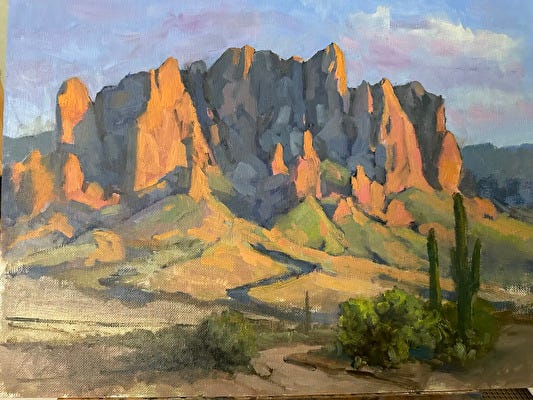
4. An authentic artistic voice develops through repetition and experimentation.
Artists sometimes approach “finding a voice” as a branding exercise. They identify a successful painter, imitate the visible characteristics of that work, and hope that a recognizable style will appear.
Woodward argues that voice develops through a more organic process. Artists find it by painting frequently, conducting studies, testing ideas, making mistakes, and noticing which decisions they want to repeat. A recognizable voice is the accumulated result of sustained choices rather than a style selected in advance.
Woodward explains:
“Don’t try to paint like somebody else just because they’re successful, and the only way that you’re going to get to find your voice is to paint all the time, do a bunch of studies, find out what works.”
This process requires a willingness to produce paintings that may never be exhibited. Experiments reduce the pressure attached to any single canvas and allow artists to strengthen weak areas deliberately. Over time, recurring preferences become a visual identity that collectors can recognize across different subjects.
Give your art a professional home with FASO.
Once you have developed a cohesive body of work, you need a professional place to present it. FASO gives artists the tools to showcase available work, build an email list, communicate directly with collectors, and make purchasing easier—all from a website created specifically for fine artists.
Instead of relying entirely on changing social media algorithms, you can build an audience that remains connected to you and your work. Let FASO handle the technology so you can spend more time in the studio developing the art that only you can create.
5. The right venue matters because every venue attracts a different buyer.
Artists should not assume that strong work will sell equally well everywhere. Woodward emphasizes that galleries, outdoor shows, frame shops, antique stores, regional exhibitions, and direct online sales attract different audiences.
Outdoor shows can be useful, but artists should research them carefully. Woodward recommends events with a history of returning art buyers and a clear emphasis on two-dimensional fine art. A large crowd does not guarantee sales if the audience primarily came for crafts, entertainment, or children’s activities.
Galleries offer something artists may struggle to build independently: access to established collectors. Buyers often trust a longstanding gallery to evaluate the work, provide context, and protect the transaction. The gallery’s commission pays for more than wall space; it buys access to relationships and credibility that may have taken decades to establish.
The gallery’s primary question is practical: Will its clients buy the artist’s work? Artists seeking representation should therefore identify galleries where their quality, subject matter, price range, and production capacity fit the existing business.
6. Genuine relationships are becoming more valuable than constant social-media activity.
Woodward is skeptical of advice that tells artists to post continuously, chase engagement, and reorganize their lives around changing algorithms. Social media can provide visibility, but it can also consume studio time and create the false impression that every other artist is advancing faster.
She sees renewed interest in openings, exhibitions, print publications, and real-world experiences. Buyers want to meet artists, hear talks, visit galleries, and participate in the excitement of an event. Digital tools remain useful, but they work best when they support relationships rather than replace them.
When speaking with potential buyers, Woodward recommends making the conversation about them. Artists can ask what brought someone to the show, where the person is from, or what attracted them to a particular painting. They should avoid immediately explaining what the painting means, because the buyer may already have formed a more personal interpretation.
Woodward describes her approach this way:
“I don’t try to sell them; I try to give them confidence in their decision to like my artwork, because I’m not forcing them to like something about it.”
An email list becomes especially valuable after that relationship begins. Someone who has purchased a painting or connected with an artist at an event has a reason to remain interested. Email allows the artist to maintain that connection without relying entirely on a social platform to deliver the message.
7. Prices should reflect costs, venue, and proven demand.
Artists cannot establish credible prices by choosing impressive numbers or copying more famous painters. Woodward says pricing depends heavily on where the art is sold and whether buyers have already demonstrated a willingness to pay that amount.
At a minimum, artists must calculate the costs of materials, framing, exhibition fees, and commissions. Woodward recommends that emerging artists recover those costs and make a profit, even while they are still developing their skill and reputation. Gallery commissions must also be incorporated into the retail price rather than absorbed as an unexpected loss.
Artists should maintain consistent retail prices across venues. Undercutting a gallery or offering the same work elsewhere for less can damage the artist’s relationships and disrespect collectors who previously paid the full price.
Prices can rise when consistent sales prove that demand supports an increase. Woodward suggests testing moderate increases, such as 10 percent, rather than making dramatic jumps. Artists who raise prices too quickly can remove themselves from the market before their reputation is strong enough to justify the change.
8. A sustainable career must fit the artist’s actual personality and capacity.
Woodward rejects the idea that every serious artist must pursue national recognition or full-time gallery representation. Different careers require different combinations of production, teaching, travel, direct sales, gallery relationships, writing, and public interaction.
Some artists can produce hundreds of paintings annually and keep several galleries supplied. Others create only a few major works each year. Some thrive while meeting collectors at outdoor shows, while others prefer galleries to handle every sale. A smaller career can still be artistically meaningful and financially successful.
Woodward acknowledges that she does not want the pressure associated with maintaining multiple galleries. She continues to sell her work through selected opportunities, but she has chosen a scale that leaves room for writing, research, relationships, and other interests.
Artists should create a specific vision for the next year or two rather than measuring success against someone else’s career. That vision might involve securing a first regional gallery, completing a 20-piece portfolio, establishing profitable prices, developing an email list, or becoming a respected local artist.
The right career is not necessarily the largest one an artist can imagine. It is the one the artist can sustain while continuing to make work, improve, and enjoy the life surrounding the art.
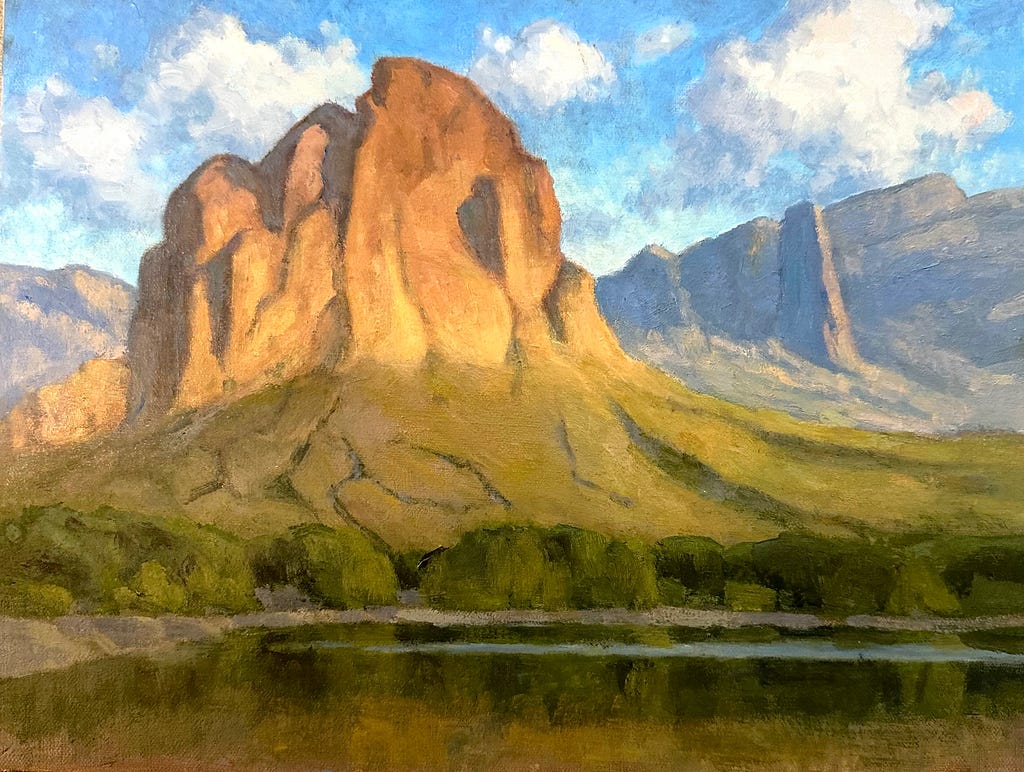
The word “yet” matters.
Woodward’s message is not that building an art career is simple. It is that the process is understandable and, with patience, manageable. Artists can strengthen their work, create a cohesive portfolio, choose appropriate venues, price responsibly, and build genuine relationships one decision at a time.
No artist can control the economy, a gallery’s response, or the next change to a social-media algorithm. Artists can control how consistently they work, how honestly they assess their progress, and how thoughtfully they introduce their art to the world.
If your art is not selling yet, do not treat that word as a verdict. Treat it as an invitation to keep painting, keep learning, and keep building a career that both your work and your life can sustain.
Want to hear the full conversations and insights from Lori? Listen to this episode of The FASO Podcast with Lori Woodward — Why Your Art Isn’t Selling (Yet) and How to Change That
PS — Note from Clint: One of the reasons I built FASO is because I believe art is important, artists are important, and the work you’re called to create deserves to be taken seriously. We are all sharing “miracles of existence” through our art.
Yes, at FASO, we build professional artist websites. Yes, we talk about marketing. Yes, we give artists tools to present their work, tell their stories, reach collectors, and sell more art.
But that is the how.
The why is that we love art, and we want to push back against a world that too often treats art like content and artists like algorithms. The modern world denigrates Beauty in preference of profit and efficiency. At FASO, we hold Beauty sacred.
So we don’t just host artist websites. We promote artists. We feature their work. We try, in our own small way, to help more art find the people who need it. And that informs everything we do and build.
If that resonates with you, we’d be honored to have you join us.
PPS — If you’re not ready to look at FASO, you can support our mission by simply clicking the heart icon at the top or bottom of this article. That helps us reach more artists and art lovers and helps us spread Beauty to a world that is desperate for it.
—Clint
Our use of AI in this article: Our team worked with AI to help generate this summary and from there we manually edited it. Our beef with AI is primarily when it is used in a way that reduces opportunities for artists. Our goal, in the places we do utilize AI, is to use it in a way that supports human artists. And we believe this use case supports rather than harms.
At FASO, we do not train AI on your artwork for the purposes of using it to generate alternative images. We do use AI to protect your artwork from scrapers (including other AI bots) and to detect and block spam. And we are exploring the use of AI in ways that send more art lovers and collectors to our customers.
As always, The FASO Way is an open forum, so we’d love to know what your opinion of such AI use is in the comments. And, please, as we always request, all comments must be dignified and respectful of us and of your fellow artist colleagues who may have differing points of view. We are in this together, so discussion, and even debate, is important. But hateful or threatening comments will be blocked.
I've learned a thing or two or three from Lori over the 15+ years that I have known her.
Thank you those videos and information so helpful and I can listen to